Five years ago today, Pat Cashin was taken from us, way too soon. He started this blog fifteen years ago, and although I don’t think I’ll ever be able to keep up with his amount of output, it is an honor to continue posting about clown history in his honor.
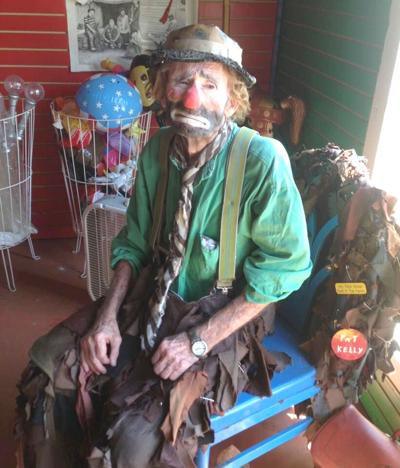
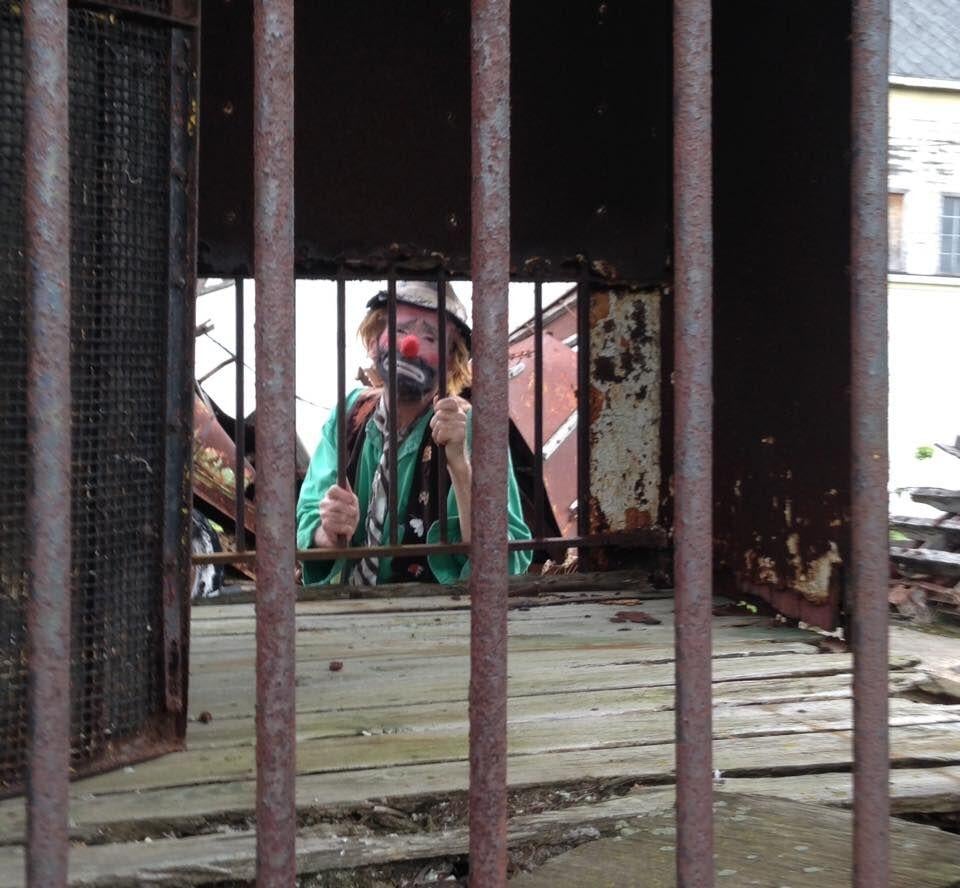
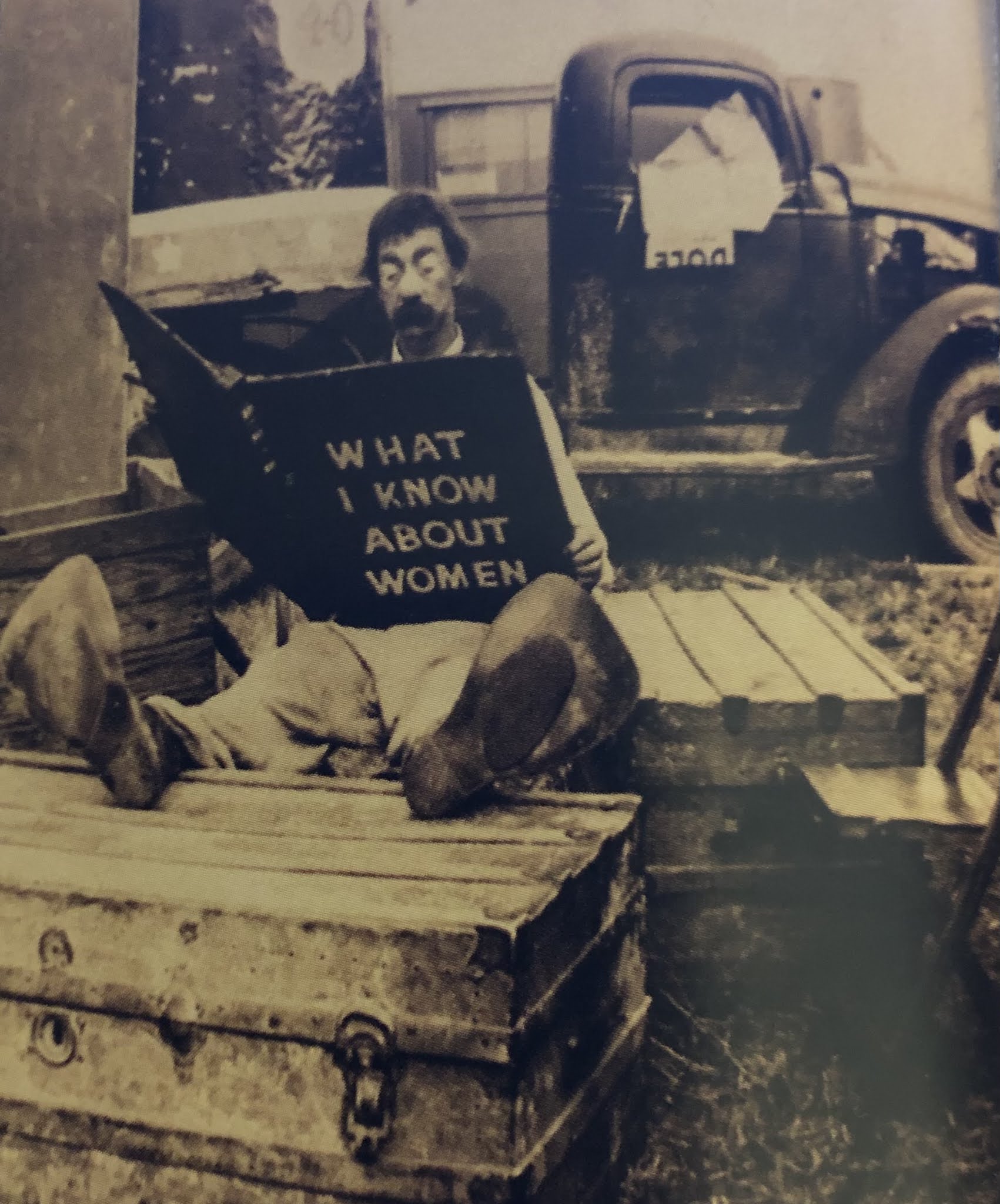
Here are some wonderful photos of Pat shared on FB by Paul Gutheil.
Pat Kelly is shown dressed in his hobo clown costume in this photo provided by Humans of Peru’s Facebook page.
Photo provided
PERU — Thomas Patrick Kelly, the last living son of the nation’s most famous hobo clown who followed his father into a career under the big top, died Sunday at Hickory Creek at Peru. He was 87.
Pat Kelly was the son of Emmett Kelly, whose sad, downtrodden “Weary Willie” character redefined the nature of clowning around the world. Unlike the jolly clowns before him, Weary Willie dressed in tatters, ate cabbage and looked like a down-on-his-luck tramp.
Bob Cline, treasurer at Peru’s International Circus Hall of Fame, said that although Pat Kelly’s clown character was similar to his father’s, he tweaked it just enough to make it his own.
“He was tramp clown, but his mannerisms and his skits were different,” Cline said. “He went out and did other things to make people laugh in his own way. The whole thing with these clowns is that everything goes wrong for them, and that makes you bust out in laughter.”
Pat Kelly started developing his persona when he first clowned in 1954 with his mother, the great circus aerialist Eva Kelly Lewis, in California. But his career officially started in 1958, when he performed in Peru with his stepfather, Joe Lewis, who was a famous cop clown.
The two put on a show outside the Fred Sanger’s department store, which is now home to the Miami County Museum.
In a interview with the Kokomo Tribune in 1995, Pat Kelly said he was “born and raised in clown alley,” and remembers dressing up as a clown when he was just 7 years old. His earliest memories were of the colorful, bright lights of the big top and traveling with famous circus troupes with whom his mother performed.
Pat Kelly is shown dressed in his hobo clown costume in this photo provided by Humans of Peru’s Facebook page.
Provided photo
Kelly went on to perform as a sad, hobo clown in circuses around the nation, including the Shrine Circus and the world-famous wild animal trainer, Terrell Jacobs, whose circus barns were demolished just this year along U.S. 31. He was also a regular act during the annual Peru Circus City Festival in the 1960s.
After decades of performing, Kelly returned to and settled in Peru, where he quickly became the city’s official clown in residence. For the last 25 years, he was the face of the International Circus Hall of Fame, putting on shows and greeting visitors during the annual Peru Circus City Festival.
Although Kelly was famous for clowning, those who knew him in Peru loved him for his gentle spirit and his ability to make just about everyone smile.
“His job as a clown was to bring laughter to the world, and his life revolved around that,” Cline said. “He brought laughter to the world whether he was in makeup as a clown, or not. He was one of the most kind-hearted, gentlest souls you ever met in your life.”
Tim Bessignano, caretaker of the museum in the Peru Circus Building, said it was nearly impossible not to feel better after encountering Kelly, whether it was watching him perform or just chatting with him.
“He made people happy,” Bessignano said. “Some kids got scared to death because he was a clown, but most kids were just tickled to death by him.”
Kelly’s passing marks the end of an era in America’s clowning history that was started by his father in the 1940s. His brother, Emmett Kelly Jr., also took up the family mantel and became a renowned hobo-clown performer who twice put on shows at the White House in Washington, D.C. He died in 2006.
And although Pat Kelly never gained the same kind of fame as his father and brother, he still left a legacy, both in the circus community and in Peru, as a one-of-kind clown who spread joy everywhere he went.
“Everyone is here for just a short time, but he left his mark,” Bessignano said.
The 1999 Ringling Blue Unit Clown Alley photographed by Vince Re. For many years Vince would set up backstage at the arena in Cincinnati, OH to take photos for people on the show.
Pictured are Joel Jeske, Tina Aguirre, Thom Wheaton, Marni Sussman, Leo Acton, Matt Morgan, Lance Brown, David Solove, Gabor Hrisafis, Todd Zimmerman, Allegra Barnett, Cezary Skarzynski, Christy McDonald, Mark Myers, and Josh Zehner.
This article is from 2006 when the Scotts won the Florida Folk Heritage Award.
Wayne and Marty Scott are well known for the superb clown shoes they make for clients all over the country. Living in semi-rural Howey-in-the-Hills, they are “can-do” kind of people. They built their own house, learning each step in much the same way they learned to make clown shoes. They talk to people with experience, use the Internet and library, and inspect things very carefully. Both artists are clowns, and both come from families that are good with their hands.
Although Wayne went to clown school in 1968 at Ringling, he worked for much of his life servicing air conditioners and refrigerators. He also had a good job with General Motors, but the pressure gave him ulcers. Once when he was at home sick in bed, he saw an ad for clowns. In spite of the fact that they had four children, Wayne and Marty decided to pack up and travel with the circus. Marty worked on wardrobe and Wayne performed as a clown.
Being around circus people, the Scotts found a niche for themselves. Seeing a need for clown shoes, they carefully cut up an old pair to see how it was made. At first Wayne worked alone, initially placing the clown shoe over the top of an old regular shoe. When he found out that so few people made clown shoes, he studied how to make cowboy boots, which taught him tricks for his own specialty.
After Wayne had worked alone for seven years, Marty joined him in creating the shoes. Their products are considered excellent because they are individualized, comfortable, and long-lasting—about seven years or more. Clowns become so attached to their shoes that they do not want to give them up. When they become worn, they send them back to the Scotts, who refurbish them. Working as a seasoned shoemaking couple, they can produce a pair of shoes in about six hours. The leather goes on last. It is soaked in water and then put in a convection oven at 150 degrees for three hours to dry in order to get its shape. They use horsehair instead of polyester as stuffing to create the shapes. They say that horsehair doesn’t absorb water like polyester does; therefore the shoes do not get moldy as easily.
Wayne designs all the shoes himself. The Scotts make a large quantity of Mary Jane shoes, which is primary type that Ringling orders. Theyalso make period boots for the Sarasota Opera Company and other opera companies throughout the country. In addition, they create a variety of clown props. Today they are passing their unique skills to younger members of their family.
Former circus clown/owner/dog trainer/management/talent scout and current Circus World Museum director, Scott O’Donnell, on Vidbel’s Olde Tyme Circus in the 1990s.
After a long hard year, the laughs are going to be heard again as the International Clown Hall of Fame and Research Center reopens today!
Exactly 11 years to the day we opened our doors in the circus city of Baraboo, Wisconsin!
Open Monday thru Saturday from 10:00 am to 5:00 pm. Sunday by appointment only.
Pre-Pandemic Prices! $8.00 for Adults, $5.00 for Children under 12.
New exhibits! The largest collection of clown artifacts in the world! As seen on American Pickers, History Detectives, 50 Museums to See Before You Die, Ripleys Believe it or Not and many others!
Father Jerry Hogan passed away last night after a prolonged illness. Through his long career as a circus priest, he became close friends with many in the circus business, especially the clowns.
Father Jerry, thank you for sharing your light, your love, and your laughter with us all of these years. Rest in peace.
Former Ringling Red Unit clown (and boss clown) Dave DeDera talks about his circus career and working in Las Vegas where he has been performing since the mid 1990s.