Friday, September 15, 2006

Paul Jerome: Tramp Makeup


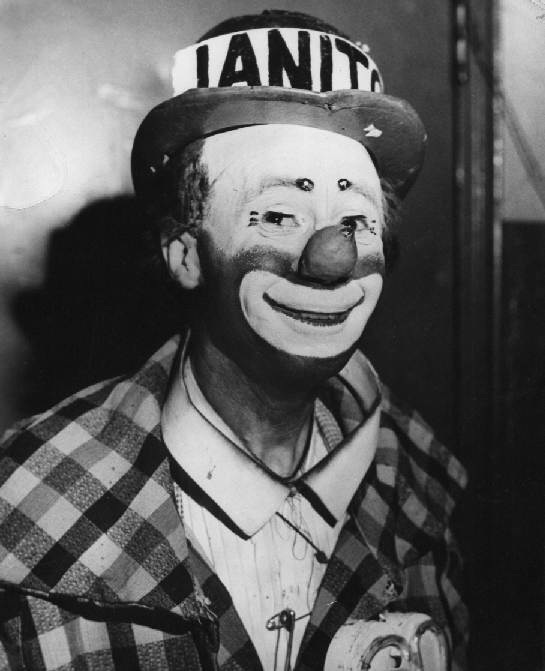
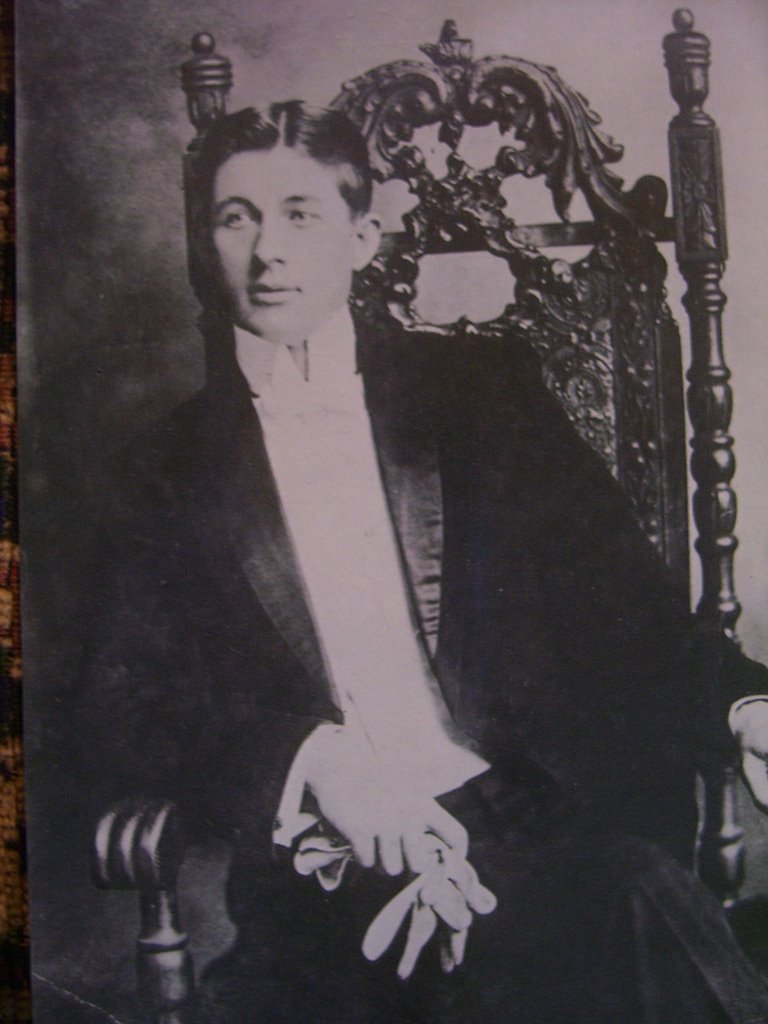
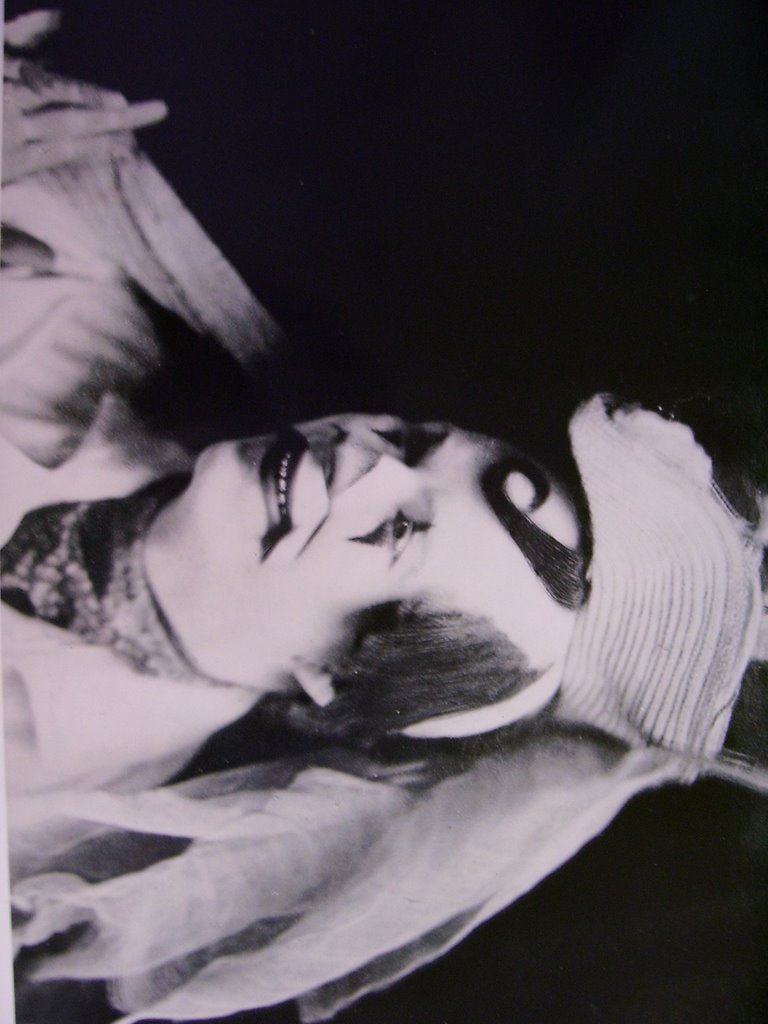
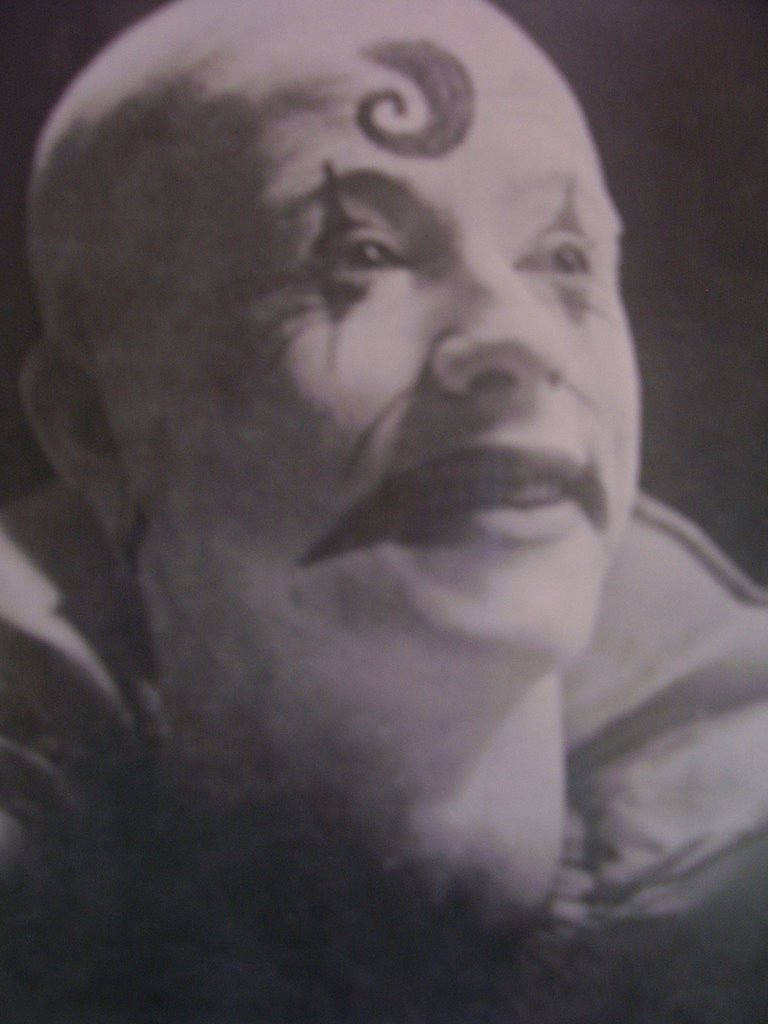
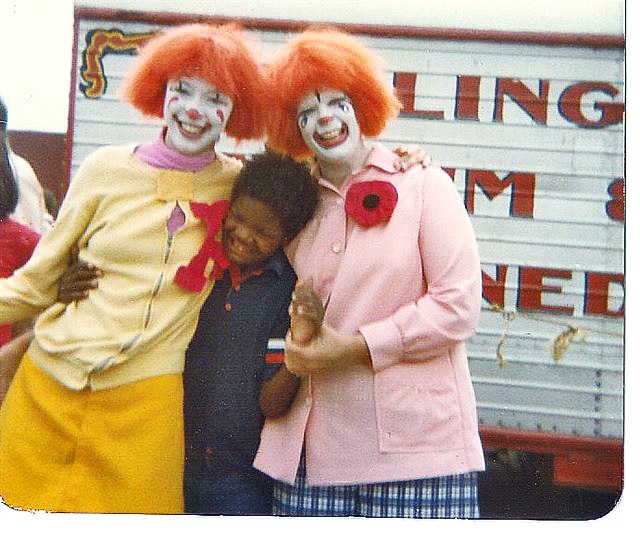
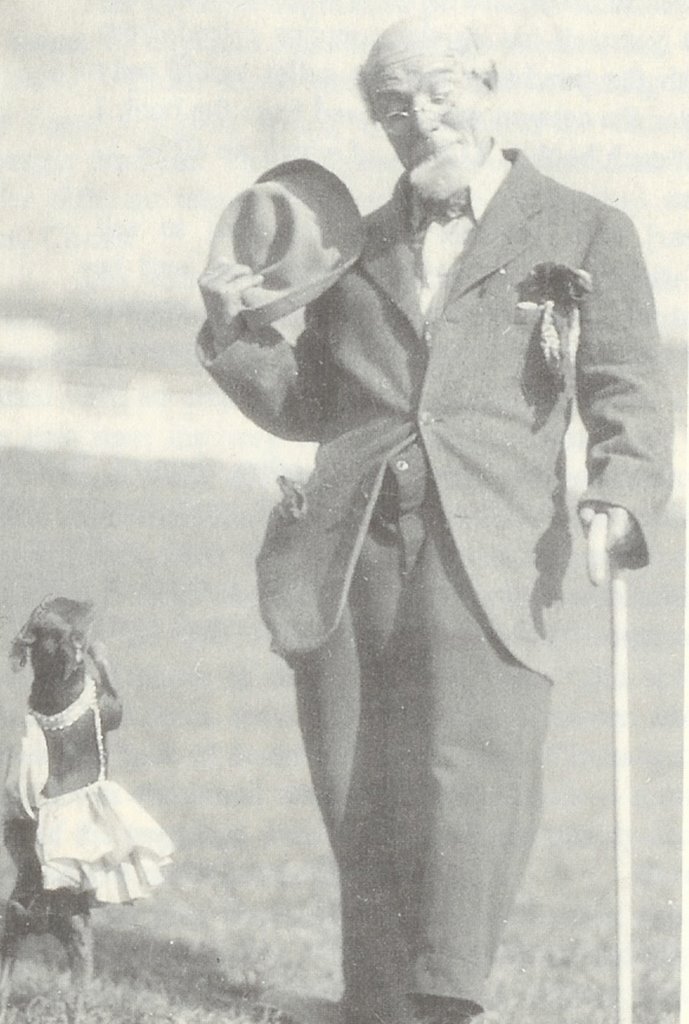
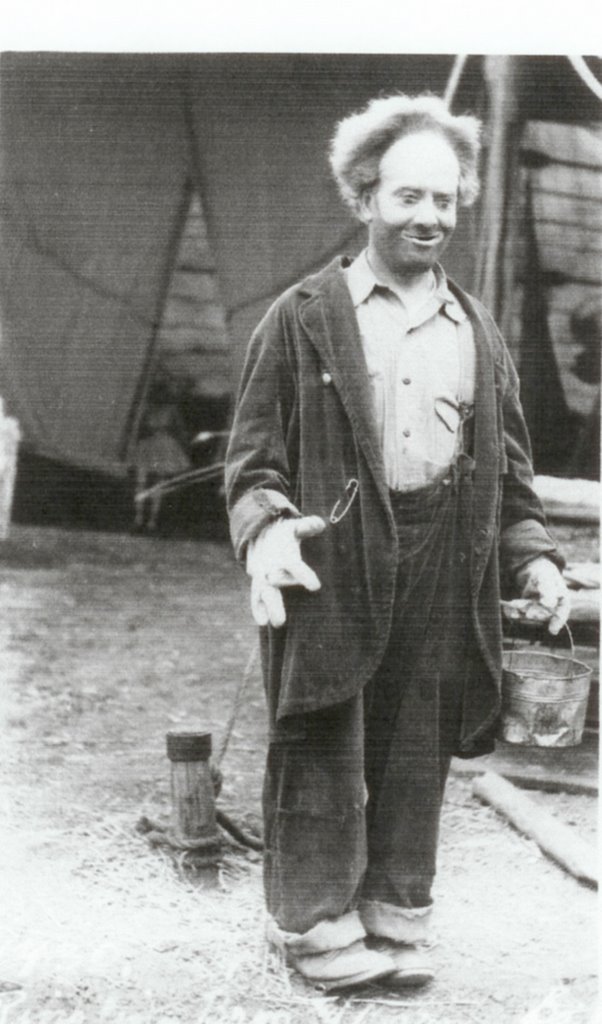
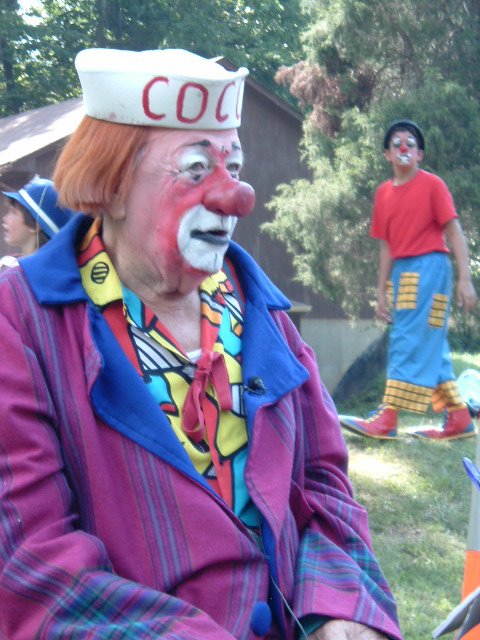
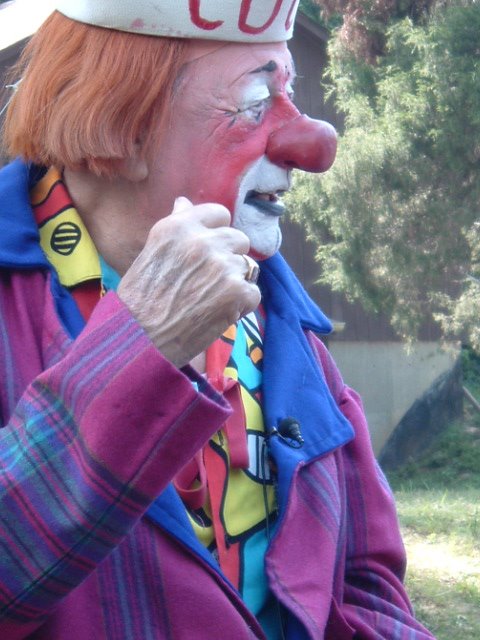
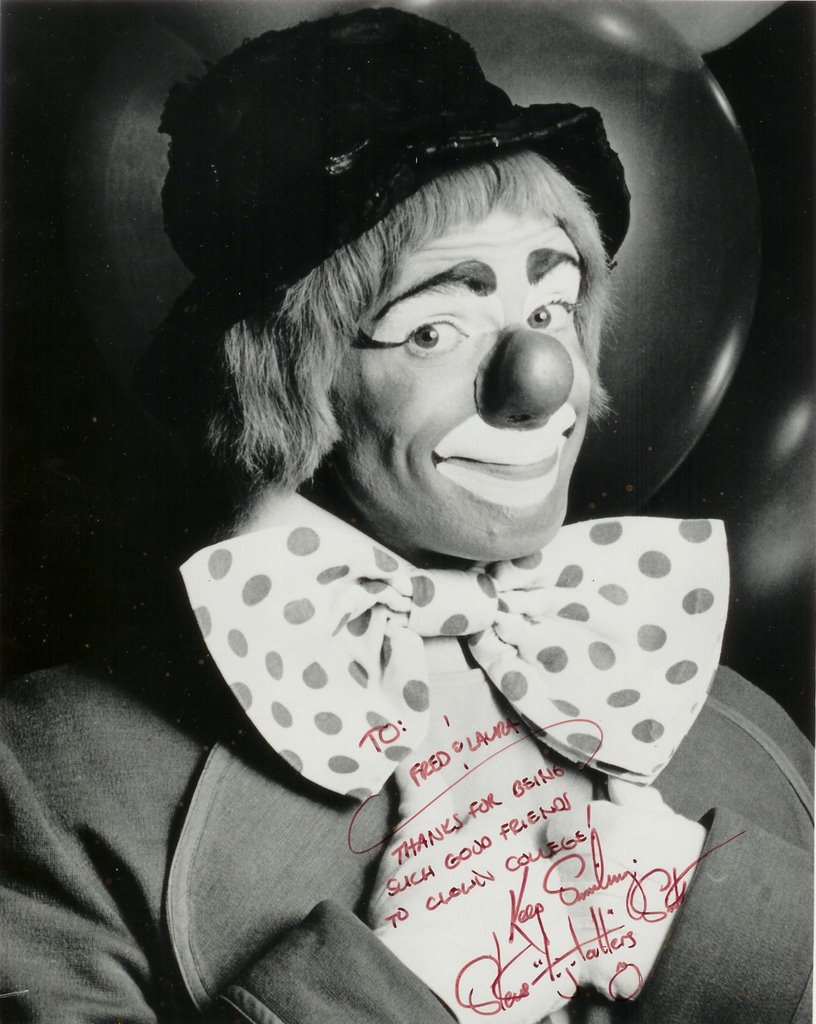
The very distinctive tramp makeup of Paul Jerome, "The Neon Clown", which features the light up nose that so many writers have attributed (and continue to attribute) to Felix Adler. Jerome's earlier whiteface makeup IS similar to Adler's and next week I'll try to find a few photos to post side by side for comparison.

Thursday, September 14, 2006

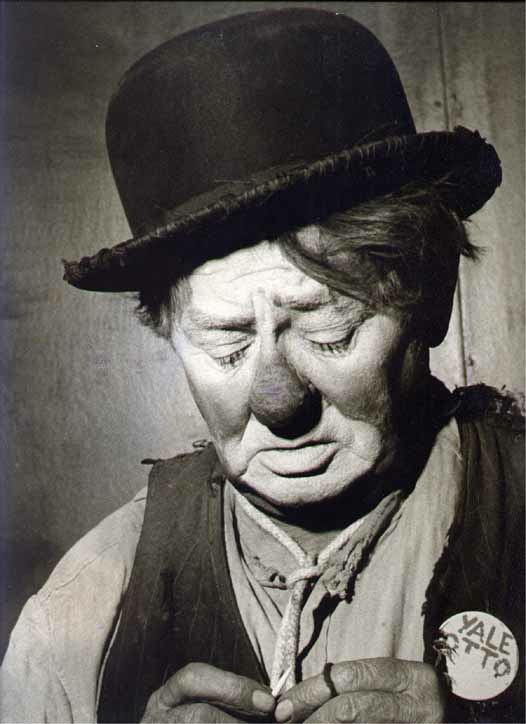
Otto

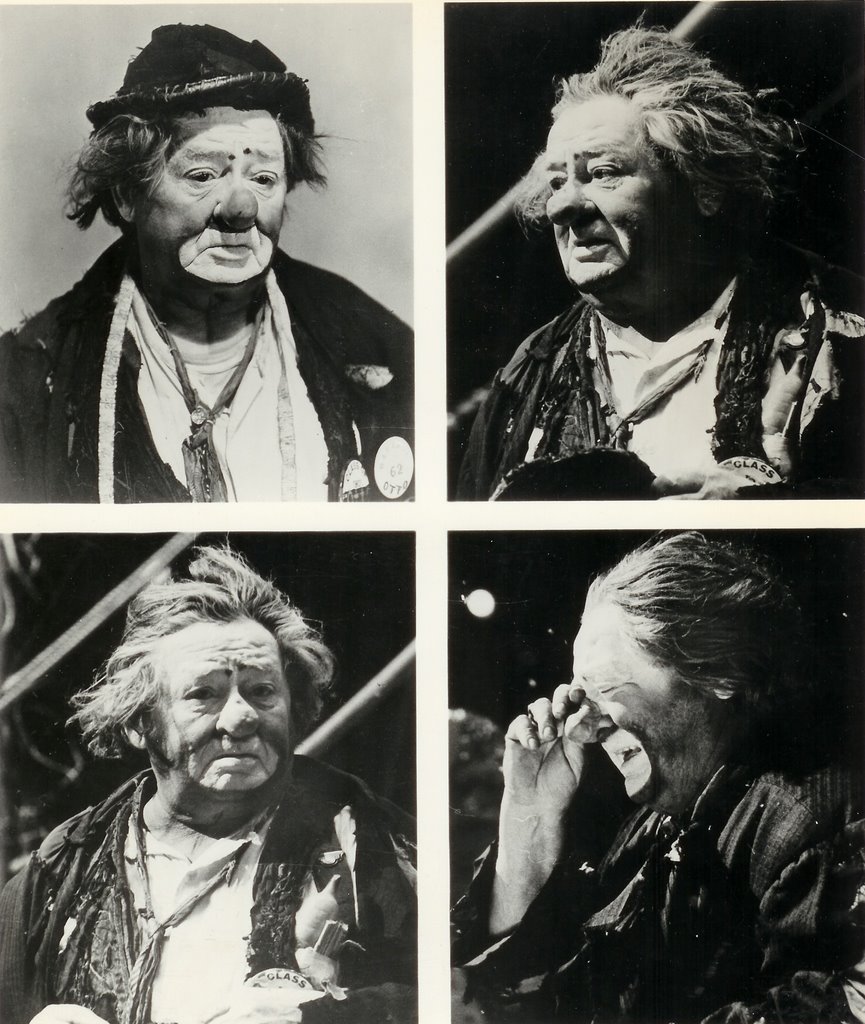
Series of photos courtesy of Robin Estes


Last night we received a message in the "comments" section of a photo of Otto Griebling and Harriet Hodgini from someone identifying themselves as "Julie".

She said that she is the grand-daughter of Otto and Hanna Griebling.

I hope a few more photos of "Grampa" here could entice Julie to email me at cashincomedy@yahoo.com so I could talk to her at length about her grandfather.

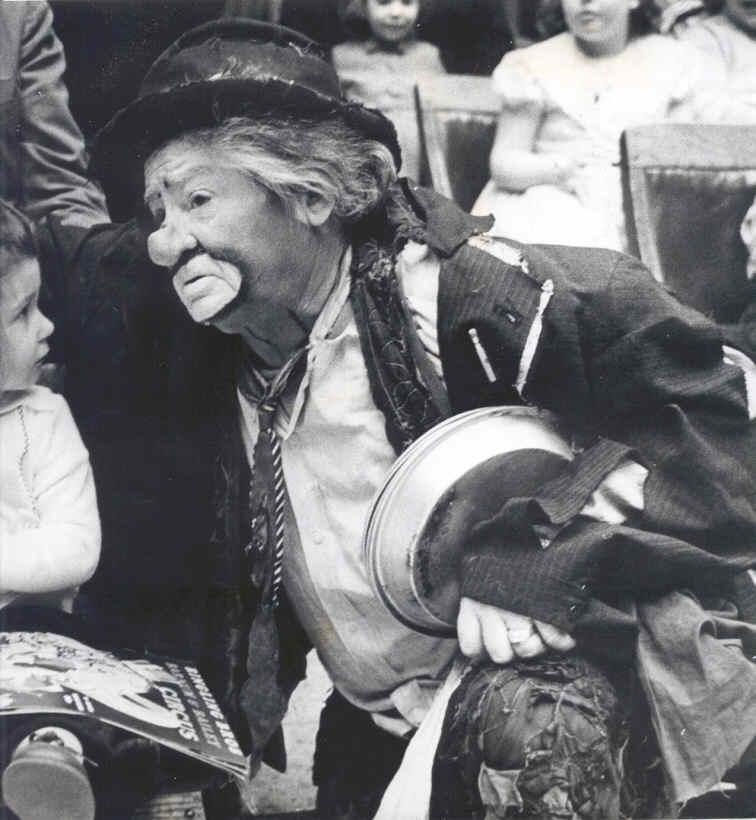
More Otto

Another Otto

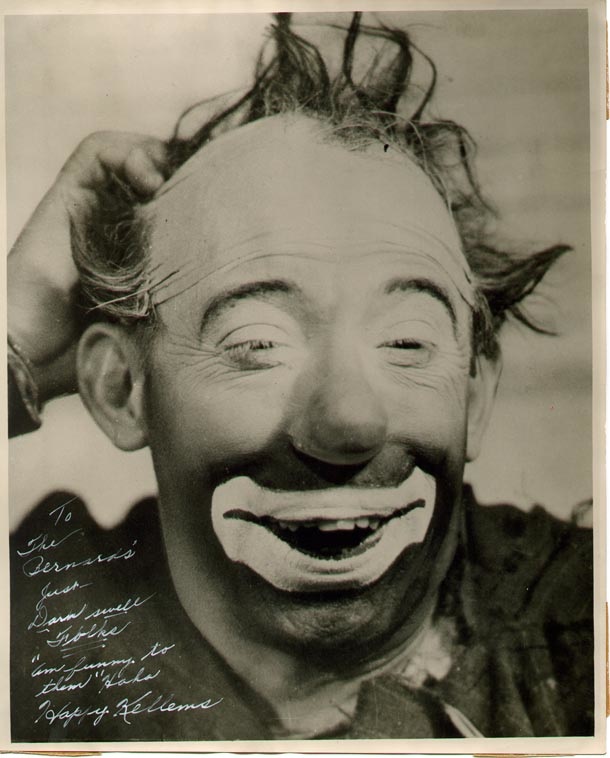
Happy Kellams


Longtime Shrine Circus fixture Happy Kellams

Wednesday, September 13, 2006

Big Apple Circus: Step Right Up

Last night I was fortunate enough to see the dress rehearsal for the new 29th edition of Big Apple Circus, "Step Right Up".

Unbelievable!

Francesco, Justin Case, Johnny Peers, Joel Jeske (who really outdoes himself) and Barry Lubin ALL IN ONE SHOW! And that's just the comedy! Steve Smith and his team have much to be proud of this morning. They've assembled an amazing cast that have created a truly wonderful show.

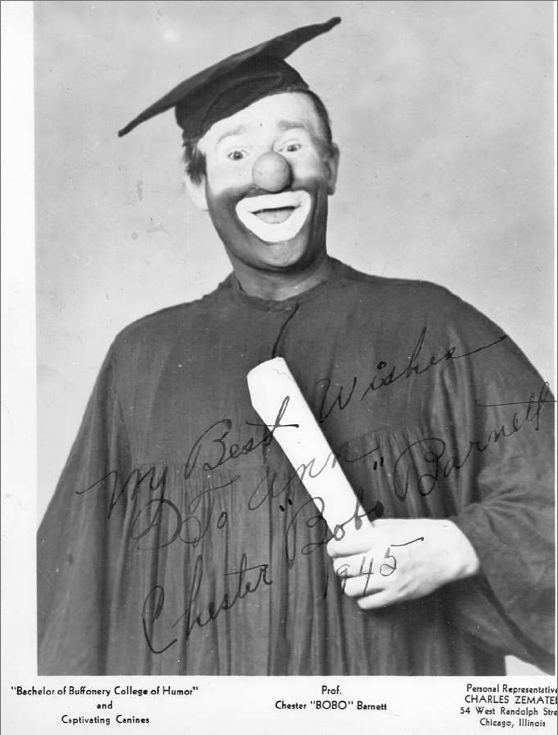
Bobo Barnett & Clown College


"Prof." Chester "Bobo" Barnett, former Ringling clown and longtime star clown with several Shrine shows, in cap and gown and described as "Bachelor of Buffoonery College of Humor" in this autographed photo from 1945.

How widely distributed was this photo and just how much did Bobo have invested in the idea? Was it just for this one single publicity photo? Did he frame the act around it for a time?

We've all heard that the idea for Clown College was Irvin Feld's.

I've heard that the idea for Clown College was Danny Chapman's.

I've heard that the idea for Clown College was first suggested by Otto Griebling.

But maybe the germ of the idea came from a widely distributed publicity photo of Bobo Barnett?

Tuesday, September 12, 2006

The Francescos 1955: Boxing Gag Video

Video of what looks to me to be the Francescos doing a boxing gag in 1955.

Unfortunately, I can't show it to you here.

Google videos does not allow you to embed video the way YouTube does so you'll have to cut and paste the address below into your web browser window...


http://video.google.com/videoplay?docid=5451813045811338234&q=circus*+clown*&pr=goog-sl


It's only a few seconds of video but it's well worth your trouble for the chance to see a absolutely flawless execution of a "toothpick" in live performance.

Monday, September 11, 2006

9/11


I don't think that there is ANY photo that sums up the shock, horror and genuine uselessness that I felt on the morning of September 11, 2001 like the image of Emmett Kelly running across the RBB&B lot with a bucket of water attempting to help put out the roaring Hartford Circus Fire of 1944.

You sat and watched it on TV, over and over and over... and were powerless. You had no idea when or where it was going to stop. No idea what to do.

No matter what you did, what you thought, no matter how hard you tried you couldn't stop it from happening again and again and again. The worst thing imaginable. Over and over and over. Planes, buildings, horror, crashes, death. Over and over and over.

And just when you believed that it couldn't get any worse, the Towers began to collapse.


It was a beautiful day. With the trail of smoke visible from my front window, it was STILL a beautiful day.

That's what really killed me. How could something so terrible happen on such an absolutely beautiful day?


I'd just driven past the towers a few days before. I was driving through the Holland Tunnel on my way to Steve Smith's birthday party, listening to the new Elvis Costello CD and I felt good. Really good. All seemed really right with the world.

It was a wonderful night. It was a wonderful party. People came from far and wide and I met and talked with people I've admired since childhood, all there to celebrate the birthday of a man who has been a good friend to us all.

On September 10th I spent the day at Newark Airport. I was there shooting a commercial for United Airlines and spent the whole day in their VIP lounge, looking out at the New York skyline, drinking it in.

I still felt good from the party. I felt good to be cast in another commercial. I'd done 5 in the last year. One was even running internationally. It felt like I was finally getting somewhere . It felt like things were finally coming together.

Then...

Sunday, September 10, 2006

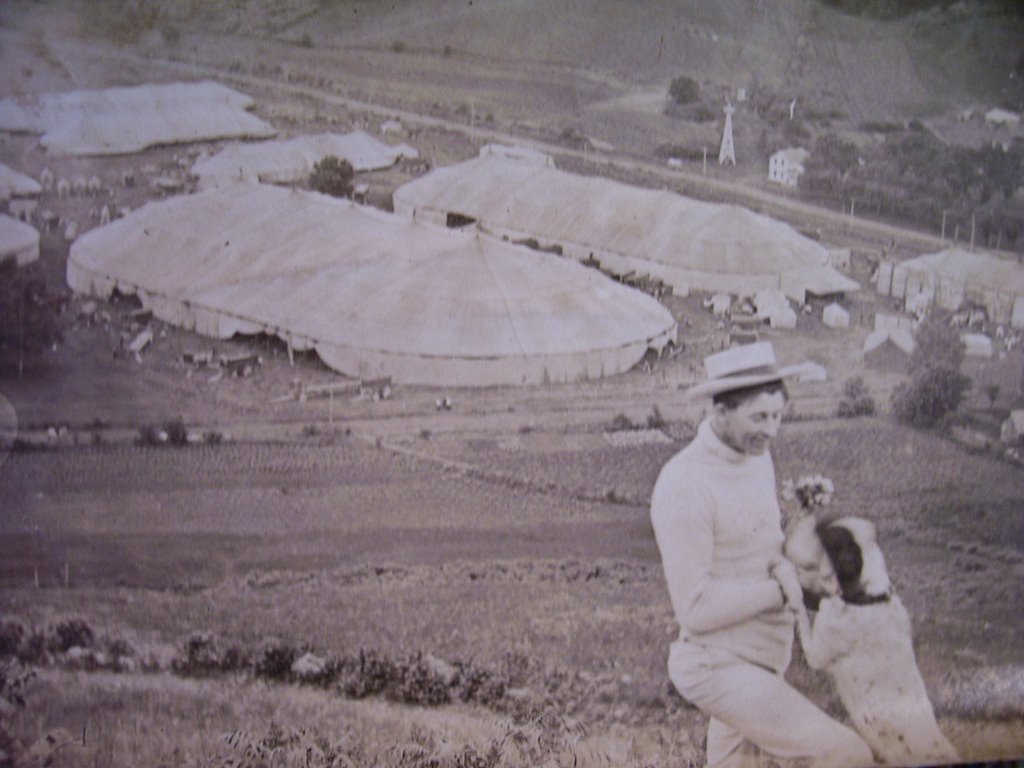
Slivers: Beautiful Day

Photo courtesy of Tom Dougherty


Tom described this as his favorite picture of Slivers. I can see why.

Slivers on a hilltop, on a beautiful idyllic day playing with a dog. He's a young man at the height of his career, at the top of his profession with one of the largest circuses the world will ever see as his playground in the background.

What's not to love?

Saturday, September 09, 2006

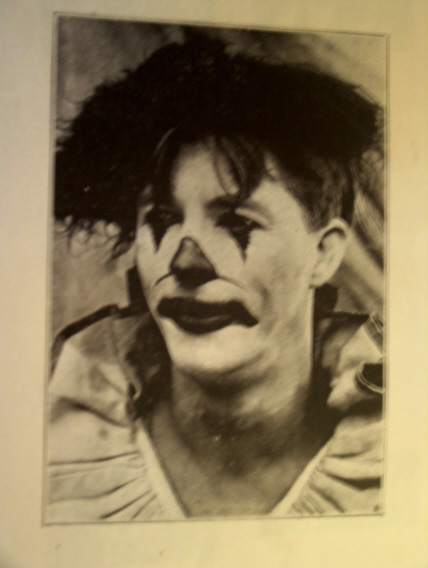
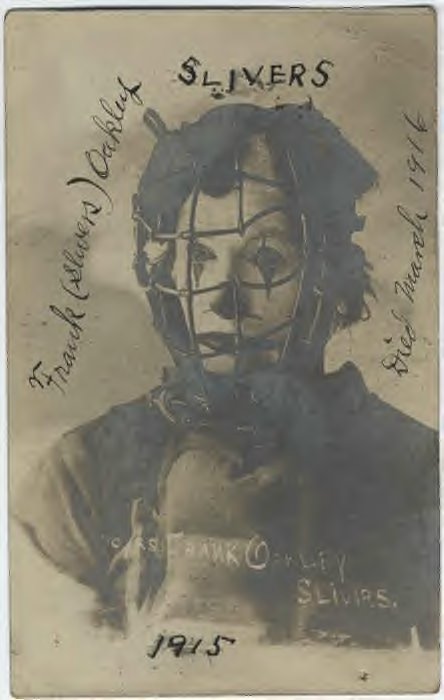
More Unseen Slivers

Photos courtesy of Gene Wolande


These extremely rare family photos come to us from Gene Wolande, a Los Angeles screenwriter and relative of Frank "Slivers" Oakley. The first, a glimpse of Slivers in makeup without his wig, the second ANOTHER photo of Slivers out of makeup (!) and finally a great close-up of Slivers in the catcher's mask he used in his famous Baseball Gag.

Mr. Wolande has written an award-wining screenplay on Slivers' life that I'm sure we'd ALL like to see get made into "a Major Motion Picture". As much drama, comedy and pathos as there is to Slivers' story I find it hard to believe it hasn't been made into a movie already.

Friday, September 08, 2006

Slivers Oakley: Golf Gag

Photo courtesy of Tom Dougherty


Another in a series of photos from the Tom Dogherty Collection, The Golf Gag, taken from the personal scrapbook of Frank "Slivers" Oakley.

Thursday, September 07, 2006

Slivers Rag

Todd Robinson reminded me that "Slivers Rag" the Ragtime accompaniment to Slivers' Baseball Gag, composed by Harry Cook (and described as an "Eccentric Rag") is available online at...

http://parlorsongs.com/issues/2001-6/thismonth/featurea.asp

Frank Oakley: Out of Makeup

Photo courtesy of Tom Dougherty


Another photo from the Tom Dougherty Collection of photos from the personal scrapbook of Frank "Slivers" Oakley.

This is the only photo of Frank Oakley, out of makeup, that I've ever seen.


Tomorrow, another photo from the Dougherty Archives and one that helps dispel the myth that Slivers was a "one trick pony" with only his famous Baseball Gag. Tomorrow: Slivers' Golf Gag!

Wednesday, September 06, 2006

Slivers Oakley in His Prime

Here is the 2nd in a series of extremely rare photos from the Tom Dougherty Collection of Slivers Oakley from Slivers' own personal scrapbook. Today's photo looks to be taken during his prime. Why is is sideways? Because that's the way it was received and I don't know enough about my new macbook to change it yet.


FRANK “SLIVERS” OAKLEY


Frank Oakley, also known as “Slivers” (1871-1916) was the most popular circus clown of his generation. Born in Sweden, both of Oakley's parents were concert singers. At the age of 14 he began to practice as a contortionist and at 16 he joined his first circus. His parents convinced him to enroll at the University of Michigan but two years later Oakley was back under the big top.

His began his career with Andrew MacDonald's Circus but he soon joined the Ringling Bros. Circus in 1897. Before the turn of the century Oakley performed with the Barnum & Bailey Circus followed by three seasons with the Adam Forepaugh & Sells Bros. Circus (1900-02). Oakley returned to the Barnum & Bailey Circus for four seasons (1903-07) where he reportedly earned up to $1,000. a week.

Slivers was famous for working solo in the ring. His featured gag was a one-man baseball game in which he played all the positions of both teams. Among his classic walkarounds was a gag in which he rode around the hippodrome track atop two giant lobsters.

He went on to perform in other circuses, in vaudeville and was featured (sometimes partnered with fellow clown Marceline Orbes) in the massive shows at the New York Hippodrome, where I believe he performed on opening night.
He married vaudeville singer Nellie Dunbar in 1902 and together they had one daughter, Ruth.
With the coming of motion pictures and the superstardom of Charlie Chaplin Slivers was supplanted as an American comedy icon. When other opportunities dried up he tried to return to Ringling where he was offered only $75.00 a week to perform walkarounds.

He committed suicide, dying by gas asphyxiation, on March 8, 1916 in his room at 308 West 71st Street in New York City. Oakley had fallen for Viola Stoll, a young vaudeville actress, and remained infatuated even after she was arrested and incarcerated for stealing his late wife's jewelry. When he tried to have her paroled from Bedford Reformatory by proposing marriage, she rejected him.


Tomorrow, the rarest of the RAREST of the rare...Slivers without makeup!

Tuesday, September 05, 2006

Slivers Oakley

Photo courtesy of Tom Dougherty


This is probably the rarest photo we've ever had here in THE ALLEY.

It is a photo of Frank "Slivers" Oakley, a true master clown and a huge star in his day. If you look through books on circus and clown, surf the web or search old newspapers and magazines, you'll only ever find a small handful of photos of Slivers. Why? I don't know. But I think that I've only ever seen five or six. This looks to be from early in his career.

This find comes to us from Tom Dougherty, currently featured on the Gold Unit of the Ringling Bros. and Barnum & Bailey Circus and one of the truly great contemporary American circus clowns...


here are a couple of photos you might call rare as
they come out of Slivers Oakley's personal scrapbook
which he kept in his trunk throughout the prime of his
career. Mitch and I met Sliver's grandson and he
showed us the scrapbook...wow! A treasure trove of
clown and circus history. I believe we were the first
people outside of the family to lay eyes upon it. It
was so overwhelming, I had to take a nap after looking
at for an hour. Fortunately I had my camera and got
some images of this remarkable find.
enjoy!

warm regards....Tom


Tomorrow, another photo of Slivers from the Tom Dougherty Collection!

Monday, September 04, 2006

Raymond Thomas

Photos courtesy of Rik Gern


Blogging today from the parking lot of the Wash & WiFi, Rutland Vermont's first (and probably only) laudromat with a free wireless internet connection. As I sit sipping Snapple Green Tea, checking my email on my macbook, in the front seat of my PT Cruiser, listening to my XM satellite radio and taking calls on my cell phone as I do my clown laundry I have to wonder again...JUST HOW DID ANYONE DO THIS BACK IN THE RAILROAD AND TENT SHOW DAYS?!?

My clown hat goes off to this fellow, Raymond Thomas, a turn of the century clown who probably wouldn't believe how easy the clowns of today have it! I don't know anything about Mr. Thomas other than the fact that Ringling Bros. and Barnum & Bailey Gold Unit Advance Clown, Rik "Bonzo Crunch" Gern was thoughtful enough to pass along these photos of him to share.

We still need submissions in order to keep the blog going until I can get back home (September 17th) and start scanning my archive to the new computer, so anyone out there with photos to share please send them along to me at cashincomedy@yahoo.com.

Thank you and have a happy and safe Labor Day!

Sunday, September 03, 2006

Not Lou

Photo courtesy of Rik Gern


Rik Gern found this amazing photo of Lou Jacobs' handiwork at putting his makeup on others.

This guy may have been a reporter doing a story or some press agent friend... whatever. There are other examples of "guest clowns" getting made up by members of the Alley and getting a duplicate of the pro's makeup.

What I find interesting is that Lou's makeup and headpiece, applied by Lou himself looks SO radically different on this man's face. What looks so warm, fun and magical on Lou looks strange and freakish to me on this guy.

It only goes to prove that you can copy someone's makeup and costume but you can NEVER copy the performer underneath it.

Saturday, September 02, 2006

Ruthie and Peggy

Photo courtesy of Rik Gern


Two clowns very near and dear to my heart, Ruth Chaddock and Peggy Williams. From Peggy herself: "It was taken near the animal compound in Long Beach, CA in about 1977".

I met Ruth when she came to Clown College to take plaster casts of all the students' faces so that we could use them to craft our own custom latex noses. I wish that I'd had more of an opportunity to talk with her. A sweeter person you couldn't ask to meet.

I first met Peggy Williams on the floor of Madison Square Garden in 1974 when I was selected to help participate in spec. Peggy held my hand and lead me to another performer who walked me through but I'll never forget standing so close to Prince Paul and Peggy Williams on the floor of the Garden! It was one of the great thrills of my childhood!

Peggy was also among the folks there to meet us and greet us on our first day of Clown College. She was a friend (and great storyteller) during Winter Quarters and while I was on the road. Peggy even sent me a very thoughtful birthday greeting this year that, because of computer trouble, I never got to reply and thank her for. Another very, very sweet person.

As for the photo, given the era that it was taken in I'm wondering if there wasn't some reference to "Laverne and Shirley" in their similar wigs and Ruth's "R" on her sweater. I don't know. Peggy, Ruth, if you're out there please tell us! Inquiring minds want to know!

Friday, September 01, 2006

Call for Submissions


I'm currently away at the Vermont State Fair from the 1st to the 10th. Then I'll be touring with Circus Royale throughout Upstate New York until the end of September. Despite the fact that we just received hundreds of photos from the Pfening Archive, the unexpected switch from PC to Mac means that I didn't have time to scan those photos before leaving home.

So, if anyone out there has photos (pre-1986) that they would like to share, please send them along to cashincomedy@yahoo.com.

Thanks,
Pat Cashin

Dime Wilson: Whiteface

Photo courtesy of Bill Strong


Dime Wilson in 1939 wearing the whiteface makeup that he used for several years.

Dime Wilson: Baseball Gag

Photo courtesy of Bill Strong


Dime Wilson in his familiar tramp character makeup that he wore for the next 50 years. The bare feet date this photo to be taken in the early 1940's. The costume makes me wonder what his take on the Baseball Gag entailed.

Thursday, August 31, 2006

Mystery Clown

Photo courtesy of Bill Strong


Can anyone identify the clown in this picture? All Bill Strong and I have been able to figure out is that he worked on the Hagenbeck-Wallace show for quite some time. He turns up in other photos from other shows but neither of us can seem to find any info on who he is.

His makeup is usually a little more "Classic American Circus Auguste" (white around the eyes and mouth, outlined in black) and he is usually pictured with a cane, but this is the best photo of him alone that we have.

Thanks,
Pat

Charlie Rivel's Props


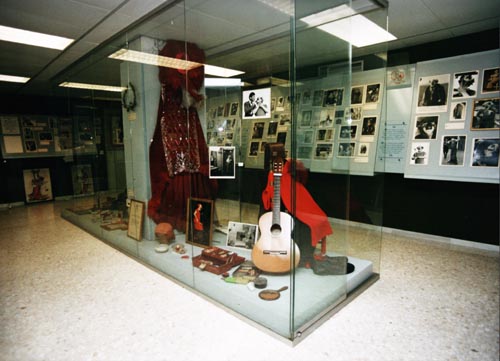
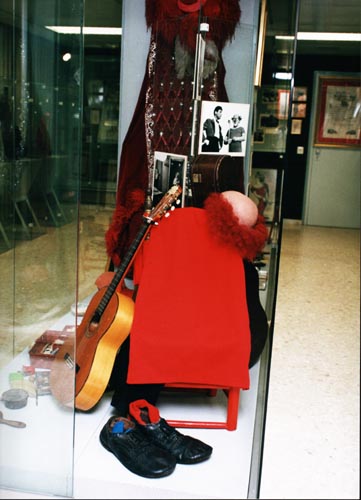
Photos taken at the Charlie Rivel exhibit at the museum in his birthplace, Cubelles, Spain. You can see Rivels's wigs, shoes, makeup box, his trademark long sweater as well as the guitar and chair for his entree. The costume from the Maria Callas parody hangs on the wall behind them.

http://www.cubelles.com/cubelles/serveis/index.phtml?idservei=21&grupo=4

David Carlyon on George L. Fox

My friend Dave Carlyon, author of the book Dan Rice: The Most Famous Man You've Never Heard Of ( http://www.amazon.com/Dan-Rice-Famous-Youve-Heard/dp/1891620576/sr=1-1/qid=1157025844/ref=pd_bbs_1/103-9096260-2226237?ie=UTF8&s=books ) weighs in with more information on last week's post regarding George L. Fox...


_______________________________________________________________

Pat,

The site is terrific. Thanks for putting so much into it.

George L. Fox was a clown star whose image became very well known, and deserves our attention. However the info you pass on contains some errors and stretched interpretation.

Fox couldn't introduce violent slapstick or topical satire to America because they are ancient techniques, often employed. Slapstick before and after Fox clattered in a long line of violent comedy. As for topical satire, it was as old as Greek plays and as recent (before Fox) as 1850s America when it reached a peak of popularity in talking clown Dan Rice, whose spoken and sung "hits on the times" could be much more pointed than Fox's pantomime.

To label Fox "America's First Great Whiteface Clown" means ignoring that nearly all clowns then were whiteface, with great clowns before him. (Considering the clowns of minstrelsy, it's more accurate to say that all clowns were whiteface or blackface.) In the 1800s stage clowns vied for attention with circus clowns, while the leading circus clowns also appeared in winter all-star circuses in big city theaters. (Fox at Barnum's American Museum had nothing to do with circus, because it was strictly a stage show. Barnum had virtually no connection to circus till he was in retirement, when circus men approached him for the use of his name in what would become "Barnum & Bailey".)

The claim for Fox's pioneering role partly relies on our age's bias that 19th-century performing was excessive, full of waving arms and wild faces, needing the "reform" of quieter performers. Fox's silence fits the presumed "reform". However this bias ignores the historical fact of quiet subtlety in earlier performances, and the psychological fact that each age sees itself as an improvement on older ages. (Notice the same bias slapped on circus clowns, that all we do is "cavort" in arm-waving, mugging "antics".)

A related suggestion has been made that an American style of underplaying originated in Fox's deadpan. Any claim that someone pioneered an "American style" of anything is an attention-grabber but usually omits contemporaries and predecessors. As a historian and a performer, I ran across much comedy before Fox that wouldn't have worked without underplaying and deadpan.

Much of the praise comes from "The Age and Stage of George L. Fox" by Laurence Senelick. Though I hesitate to contradict Senelick, a brilliant performance scholar, I believe he made too much of Fox.

Fox's influence is questionable. Though his image became widely known, very few audiences or performers across the country ever saw him perform because he starred mostly in New York, then only one of many centers of performance (Boston, Chicago, New Orleans, etc.). However his NYC base boosted his retroactive stature, for reasons having nothing to do what his clowning. First, our age's New York-centric bias sees NYC performers, present and past, at a pinnacle. Second, as a practical matter of historical research, scholars can access archives in New York easier, making it more likely they'll feature New York-based performers like Fox. Adding to his retroactive appeal is the same romantic allure of James Dean or Janis Joplin, that they, like Fox, died young.

Hope this helps.

Dave
**********************
David Carlyon, CC '76 [and Ph.D. '93]
www.DavidCarlyon.net

Wednesday, August 30, 2006

1st Mac Attempt


I don't know if this is going to work, or how it's going to look, so please bear with me.

PLEASE take a moment to let me know if the image is appearing on everyone's PCs.

New Mac User

My computer, which has been on it's last leg for the whole summer, may finally have died last night. My wife bought me a brand new Mac book last night for my birthday and I'm still trying to get the hang of things.

I'll post something just as soon as I learn how.

Tuesday, August 29, 2006

Shorty Flemm


Emmett Kelly's spotlight gag and Otto Griebling's pie plate come-in may have their origins in the same location. Shorty Flemm (listed as Shorty Flynn in some books) was a fixture on the Ringling show as well as at Shrine circuses for many years. He did a come-in gag similar to Otto's in that he played one side of the arena against the other for their applause. Instead of pie plates, Shorty used a broom and his gag included a bit about being chased by the spotlight.

After Shorty passed away, come-in was done, in similar fashion by Bluch Landolf but without any mention of a spotlight bit. Did two of the best known clown gags of the 20th century actually begin as a single gag by a largely forgotten clown?


Photo by Betty Sheets from John McConnell's book, A History of the Shrine Circus


Shorty Flemm

(in the book EYE-LIGHT Shorty Flemm is reffered to as Shorty Flynn)

"Only a little more than a season ago Shorty Flynn went his way to that final "Happy Hunting Ground".

Shorty Flynn was a real clown. He was one of the last of that great Victorian group.

For many years little Shorty opened the Big Show in Madison Square Garden, NY, clad in realistic policeman uniform, decorated with medals, badges and buttons from many leading cities of the world and from all over our great American cities, of which he was especially proud.

Shorty and his broom always brought cheers as he bravely attempted to outrun the searching spotlight.

Shorty Flynn was featured in all forms of show business. Silent movies and the early talkies knew him as the princely little policeman who actually got his man and who always won the sympathy of the audience. Shorty was also a familiar figure on Broadway and the old Orpheum circuit when vaudeville was really vaudeville and didn't need a W.W. to prove it.

Shorty's last years of show business were confined chiefly to clowning with the Big Show in New York and Boston and for Hollywood where Shorty admitted honestly that he enjoyed living comfortably since he "wasn't as young as he had been " when any mattress was a bed."

~ From EYES-LIGHT by B. Boyd Blount, a BOBBEE book


Bluch Landolf


- Photo courtesy of Fred Pfening and the Pfening Archive

Bluch Landolf


"The Ringmaster well might feel like telling Bluch Landolf to pull up his pants as he passes into the Big Top - but those pants are really designed for half-mast. Old-times will recall Bluch in the NY Hippodrome and the Gay 90s Burlesques when he first created this still amusing form of precarious trousers.

Bluch was born in Cedarville, NJ and boasts 60-odd years of full and active show business. He comes from three generations of actors and Bluch also deserves further recognition as the uncle of that great and clever artist - the one and only, Lillian Leitzel.

Bluch actually performed for such colorful characters as Diamond Jim Brady and Lillian Russell. Until 1897 Bluch was a gymnast. He was discovered by the late John Ringling in 1907.

Bluch's early circus career was interrupted by World War I but in 1928 he was back with the Ringlings in the combined Big Show and he has been among the great ones ever since. The state which claims the title of "Cradle of the Circus" has honored him - the Circus Fans organized in Hartford, CT are the 'Bluch Landolf Tent, CFA #24'.

The following lines occured to us in Madison Square Garden, NY, the first time Bluch went on instead of Shorty:

It was opening day and the Garden was jammed.

"What's the matter, Bluch? Got a toothache?" Then - I quickly knew ---"Oh, that's fine", I said. " I'm glad they picked you. Are you all set? Is there anything I can do?"

He shook his head absently. "I just learned the news. I'd like to run off." but quickly he turned and searched his trunk, then he spoke more lightly, " There's not much more time to choose, the spotlight's not easy in a dead man's shadow. Wonder what became of that broom? And where's my other hat?"

"Here it is" I said.

"And there goes third call! Gee, thanks, Red!"

~ From EYES - LIGHT by B. Boyd Blount, a BOBBEE book


Monday, August 28, 2006

HAPPY BIRTHDAY TO ME: Coco


Today is my 39th birthday.

I am a very lucky man.

I am extremely fortunate in that I get to do exactly what I've always wanted to do, which is be a professional circus clown, and be lucky enough to earn a living at it.

For that I am very, very thankful.

I also have a truly wonderful wife and a really great son.

My dog? Well, Honeybear getting better but she'll never be as good as our old one, Knucklehead.

I'm fortunate to have so many really great friends, in circus and clowning as well as outside, in the "real world".

I just want to tell everyone that I deeply appreciate the response that this blog has received. It's really exploded in the last few days and we're receiving more hits than ever before, from all over the world. Through it I have gotten to meet some truly great folks like Bill Strong, Robin Estes, Mike Keever, Dean Chambers, Bernie Kallman, Fred Pfening and many, many others who have sent photos and messages which have contributed greatly to this project.

After only two months, we now receive hundreds of hits a day from every corner of the world. Not bad for an internet site that has nothing to do with pornography, violent video games, conspiracy theories or conspiracy theories about violent, pornographic video games.


So thank you all for visiting today.

The following are a series of photos of just a few of the clowns who have, either directly or indirectly helped and inspired me...


Mike "Coco" Polakov

Photos taken by Ian Lloyd at Leon McBryde's Advanced Studies 2006


BIRTHDAY: Gordoon


Jeff "Le Clown Gordoon" Gordon

Photo by Elsa Dorfman
I really wouldn't be able to do any of the things that I enjoy doing now were it not for the continued friendship of Shane Hansen and his family who have helped me immeasurably.
I also owe a very real and sincere debt of gratitude to John McConnell, Rebekah Kimes and especially Jeff Gordon for allowing me the opportunity to join on with Circus Royale which really started the ball rolling for me.

BIRTHDAY: Greg and Karen DeSanto


Greg and Karen DeSanto
at the Circus World Museum in Baraboo, WI

BIRTHDAY: Steve Smith


Steve Smith

BIRTHDAY: Barry Lubin


Barry Lubin
1975

(It's just not a birthday party unless you invite your Grandma!)

BIRTHDAY: Felix


Felix Adler

Photo by Frederick Maxwell Coplan

BIRTHDAY: Paul Jung


Paul Jung

BIRTHDAY: Lou


Lou Jacobs

1940 Publicity Photo, autographed

BIRTHDAY: Otto


Otto Griebling

BIRTHDAY: Clown College '97


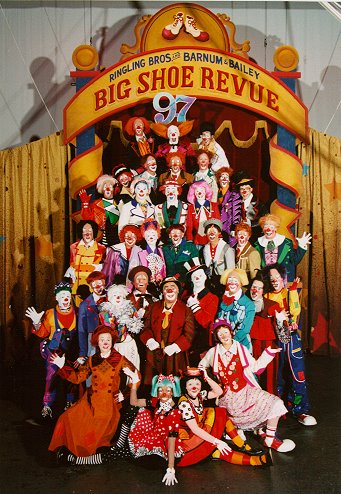
And a very special thank you to Dick Monday, Tiffany Riley, the faculty, staff and the 32 other students of the Ringling Bros. and Barnum & Bailey Clown College Class of 1997.

Sunday, August 27, 2006

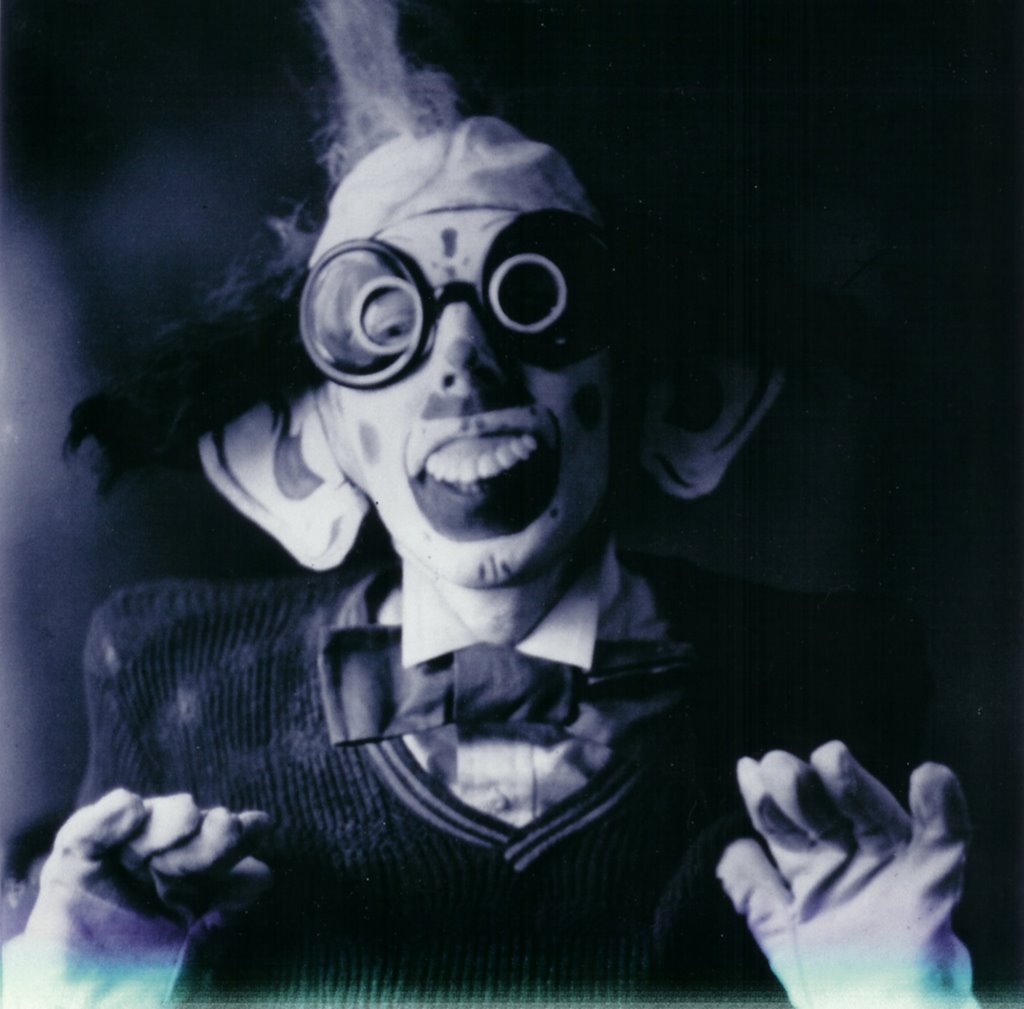
Jerry Bangs: Craziest Makeup Ever!


Jerry Bangs
Ringling Bros. and Barnum & Bailey 1930

Sometimes an amateur clown can have real trouble with makeup design. The application, the lines, the shapes, their proportion and color are all difficult skills to master. Add to that the fact that you are painting on your own face and you can understand how it would take a person quite awhile to come up with an appealing face to present to their audience.

Which brings us to the photo above. It was taken on RBB&B in 1930. I know that after Ringling Jerry had a long career on the Shrine circuit so I'll ask some of the more seasoned performers here...

WAS THIS JERRY'S REAL MAKEUP OR IS THIS SOME GAG PHOTO?!?

This has got to be, hands down, the single most hauntingly disturbing image of a professional circus clown that I have ever seen! WOW! He's got a lot going on for one head. As Mitch Hedberg put it "Man! You have a lot of cranial accessories!"

Let's review:

1) He's wearing a wig with at least two different colors of yak hair. They must be pretty different because the fact that they are clearly different is obvious even in a faded black and white picture. It doesn't look as though the wig is built onto a skullcap as much as it looks like it is hot glued to a white leather yamulke.


(Incidently, "White Leather Yamulke" was the name of my garage band in high school)


2) He's wearing some kind of sunglasses or welder's goggles. They'd be kind of cool in a retro-futuristic Fritz Lang/George Jetson kind of way if they weren't being worn by a clown.

3) He's got some kind of oversized ears thing going on but they look like they are painted onto cardboard or wood.

4) The attempt at a Chaplinesque painted mustache. Other than Rocco Paris or Scott Linker, this never really seems to work as well as you think it will.

5) The "Billy Bob" teeth. These are now available commercially and several pro clowns use them to great effect, but those people aren't also wearing hairy yalmukles, welder's goggles, wooden ears and a Hilter moustache with them.


(Incidently, "Harry Yamulke" was my radio name during my college radio years.)


6) He looks like he's being lit by a police flashlight and seems to be posed with his hands in "surrender". Remember kids, when having your professional headshots done, be sure not to use the one that makes you look like you've just been found in a potting shed on an episode of COPS!

Put them all together and you have something that doen't look quiet so much like a circus clown as it looks like a Chubacabra that has been terrorizing a Mexican fishing village.
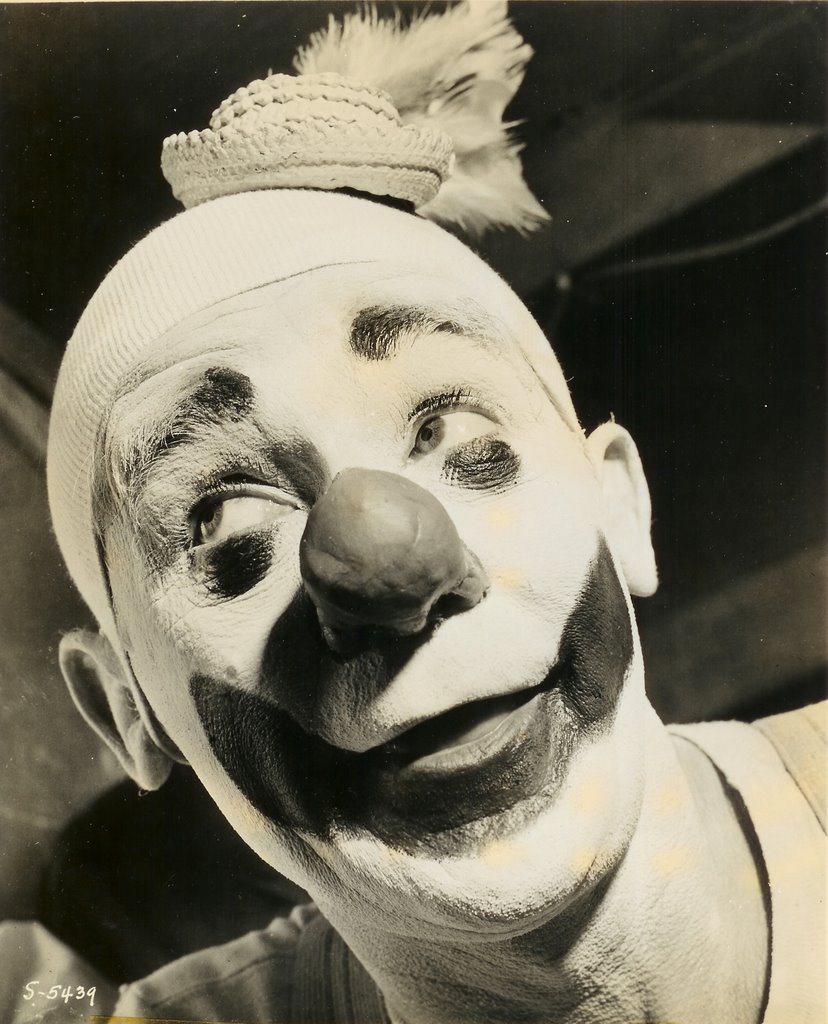
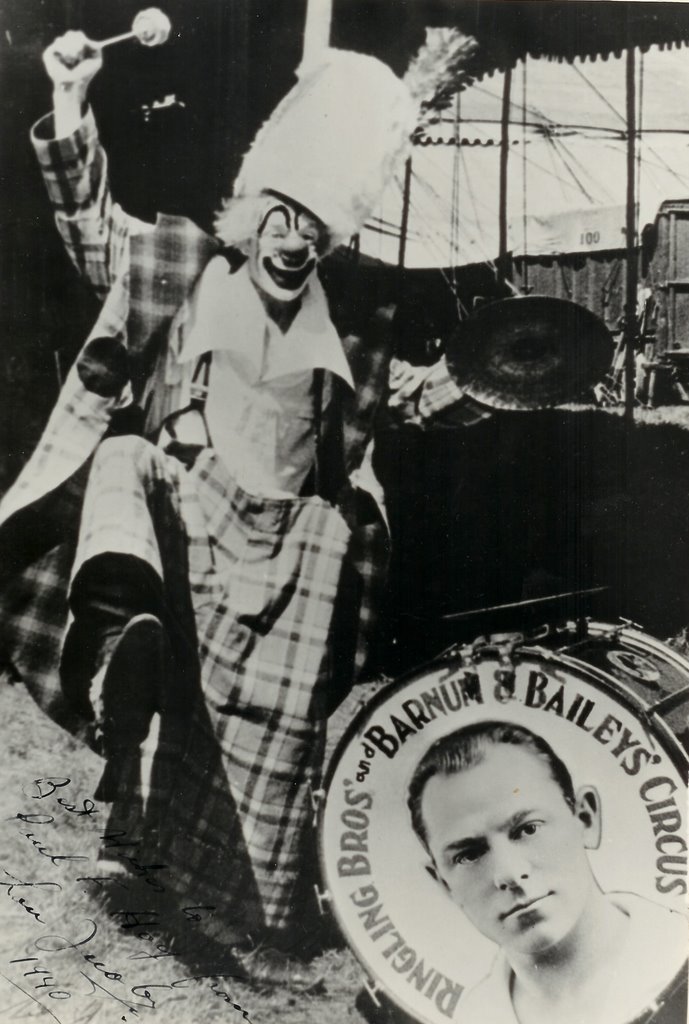
Now I'm not saying that Jerry wasn't talented or that he wasn't funny. For all I know this was his makeup for his entire career, he used it to great effect, audiences and Alley-mates alike hailed him as a genius and he was showered with riches by appreciative producers and the love of adoring groupies before finally settling down to a castle on the Riviera.

All I'm saying is that this makeup is SO crazy, so extreme, so out-of-the-ordinary that Jerry Bangs makes Chesty Mortimer look like Lou Jacobs by comparison. Imagine Jerry Bangs popping out of a dark alley at you. Or even a well lit alley for that matter!


~ Photo courtesy of the Pfening Archive

Saturday, August 26, 2006

Ernie Burch: Whiteface


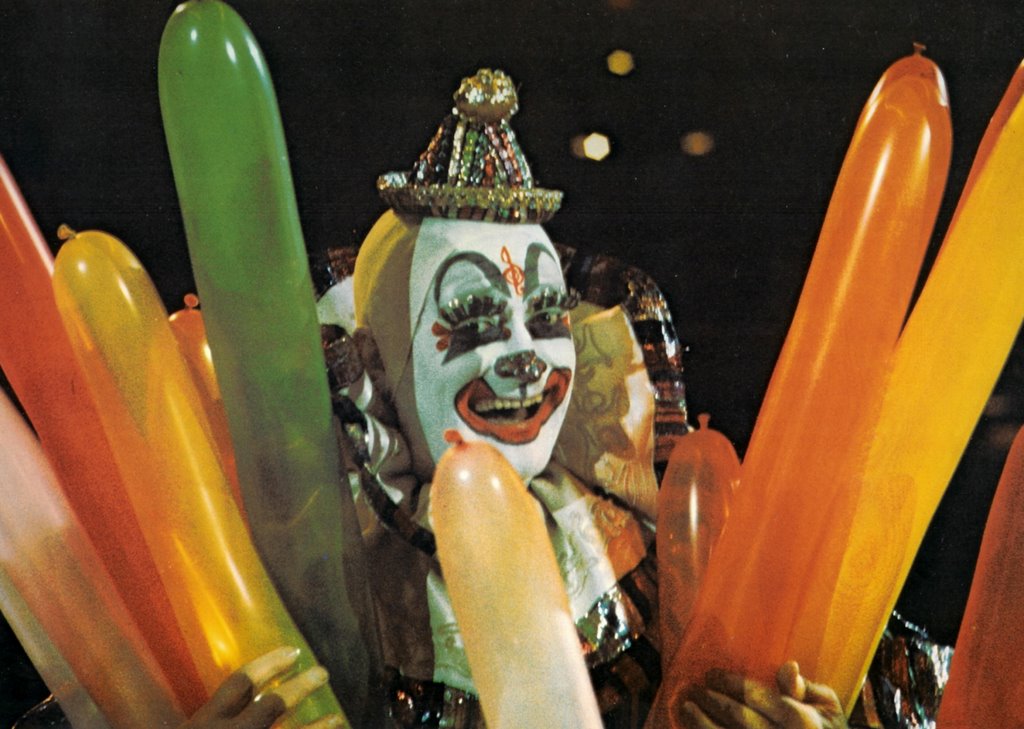
Ernie "Blinko" Burch in his classic whiteface, developed throughout the late 40s and into the 50s on the Ringling show. He's seen here performing his balloon "Come-In" gag (similar to the one performed by Dime and Connie Wilson during the same era) on Paul Kaye's Circus America at the Capital Centre in Washington D.C. in 1974.

A longtime star at Shrine circuses, he and his wife Maran became fixtures at the Circus Circus casino in Las Vegas.

From the program, Circus America looks like the single greatest show in the history of the entire American circus industry and I'm not just saying that because I'd like to get booked for Evansville this year!

But I am open that week... ; )

Ernie Burch: Auguste


Ernie "Blinko" Burch's auguste makeup on the backyard of the Ringling show in the late 40s. One day I'm going to do a series of entries documenting the evolution of Ernie's makeup. Any other clown would be perfectly satisfied with almost any version of it, but Ernie kept working until he'd developed something really unique and truly original.

Photo courtesy of the Pfening Archive

Friday, August 25, 2006

Johnny Tripp

The first of literally HUNDREDS of circus clown photos recently (and very generously) donated to this blog from Fred Pfening and the Pfening Archive of rare circus photographs...


Johnny Tripp


One of the oldest clowns traveling with Ringling Bros. and Barnum & Bailey in the 1940s, Tripp was a virtuoso on the Carillon (Bell Wagon used in parades and in spec).

Tripp, along with a young Bobby Kellogg, created the "Washer Woman" gag in 1944. Built on a classic "tit-for-tat" rhythm of escalating reciprocal violence (a device also used extensively by Laurel and Hardy as the framework for several of their most successful shorts), "The Washer Woman" has become a standard of the American circus canon as well as an excellent "Teaching Gag" for training new clowns.

I believe it was one of a handful of classic gags that was taught to every single student, for all 30 years of Ringling Clown College.

The Washer Woman Gag


The Original "Washer Woman" Gag
Bobby Kellogg and Johnny Tripp - Ringling/Barnum 1944

Thursday, August 24, 2006

Grock


Grock
Karl (Charles) Adrien Wettach
Born: January 10, 1880, Reconvilier, Switzerland
Died: July 14, 1959, Imperia, Italy


A Swiss auguste whose blunders with the piano and the violin made him the toast of European circus and stage and earned him the title "King of Clowns".


The son of a watchmaker, he became an amateur acrobat and was allowed to spend each summer with a circus, where he performed first as a tumbler and then as a violinist, pianist, and xylophonist. He became the partner of a clown named Brick (who had just split with a partner named Brock) and changed his name to Grock in 1903. Together they appeared in France, North Africa, and South America. When Brick married, Grock joined the celebrated clown Antonet (Umberto Guillaume). In Berlin, appearing on a stage instead of in the ring, they failed at first; but, by mastering stage technique, they obtained a London engagement in 1911.


Two years later Grock had honed and perfected the character of a simpleton among musical instruments that created a sensation with European audiences. The talented musician, who could play 24 instruments and speak many languages, became the "King of Clowns" in the early 1900s and performed for many of Europe's crowned heads. He also started a successful music publishing business for his popular songs. In 1924 he left England and remained on the European continent until his farewell performance at age 74 in Hamburg, Germany, on October 30, 1954.


Grock only appeared for one brief series of shows in the United States. His performances were neither as well received nor as well reviewed as he'd expected and he never returned.


Grock wrote several books, among them his autobiography, Die Memoiren des Königs der Clowns (1956; Grock, King of Clowns), and Life's a Lark. Several of his performances have been preserved on film.


The highest-paid artist at one time in Europe, was broke after buying a circus tent for his variety show after World War II, but recovered financially through successful tours. He retired to the villa he had built in the 1920s on the Riviera.


~ Edited from Grock's Wikipedia entry

Wednesday, August 23, 2006

George L. Fox


George Layfette Fox
America's First Great Whiteface Clown

Known as the "American Grimaldi", Fox introduced Joseph Grimaldi's violent slapstick and topical satire to the American stage. He transformed it into a distinctly American style of humor reflecting the events of his day and, though never a circus performer himself (he did perform at Barnum's American Museum), influenced circus clowns well into the 20th century.

In 1867, he created his masterpiece, Humpty Dumpty, giving over 1,000 performances on Broadway. His character in this production was a distinctive American anti-hero and helped Humpty Dumpty become the most popular pantomime production of the time.

The slapstick form known as pantomime had been a Broadway staple since before the Civil War, but it reached a peak of popularity during the 1860's and 70's. These shows placed figures from Mother Goose stories in wildly varied settings, always finding an excuse to transform them into the clown characters of traditional Commedia Dell Arte. Popular songs were loosely inserted whenever the audience needed a breather. Lavish sets and athletic clowning were expected, along with elaborate ballets. By far the most popular of these pantomimes was Fox's Humpty Dumpty.

The plot had young Humpty and his playmates turn into harlequinade characters and romp through a candy store, an enchanted garden and Manhattan's costly new City Hall. Fox's mute passivity set him apart from the raucous clamor surrounding him, and audiences took the little man to their hearts. Humpty Dumpty was revived several times. Fox eventually gave 1,128 performances in the title role, becoming the most highly paid actor of his time. He initiated the tradition of Wednesday matinee's to take advantage of the show's appeal to children.

Considered by many to be the funniest man of his time, his whiteface character became an important part of popular American imagery, being used in advertisements and children's books long after his death. He is considered a major influence on late 19th/early 20th century circus clowning and his unique style continued to be influential throughout early American cinema.

Sadly, he needed to be removed from the stage during his final performance due to his erratic behavior and was taken to an insane asylum where he died three years later possibly as a result of poisoning from his lead based white make up.

George L. Fox was the subject of Bill Irwin's recent off-Broadway show, Mr. Fox: A Rumination.

Tuesday, August 22, 2006

Paul Jung with Mini Mariachi


Paul Jung, hard at work dreaming up gags for next year's show in his Tampa, FL "Laugh Factory", finding inspiration in the same way that we all do... by have a little person dressed as a Mariachi jump up and down on your desk.

I get some of my best ideas this way ; )

Paul Jung Info


"He was the man behind every great gag. A sweetheart. He could make anybody's problems seem very light. The only thing he took seriously was his work, which got him laughs."

- Prince Paul Albert on Paul Jung

I'm very tempted to start blogging the files that I have on Jung's murder. There isn't much information on it available on the web. The man responsible was paroled a few years back and it would be my very sincere wish that he stumble across it and learn just how much the world lost when he needlessly killed Paul Jung.

The murder must have had a chilling effect on the Alley, which was reported in the press as being comprised of 32 that year (1965) . We all know that the Alley numbered just 14 when Irving, Israel and Judge Roy bought the show in 1968. Albert White, who had been with Ringling for years and was supposed to have dinner with Jung the night of the murder, was with Beatty-Cole the following season. I don't know that Jung's death is the exact reason that "Flo" left but I would imagine that's got to haunt a person.

Senseless.

Sorry if this is a downer for some of you. It's just one of those things that really burns me up.

Monday, August 21, 2006

Bozo, Bud & Lou

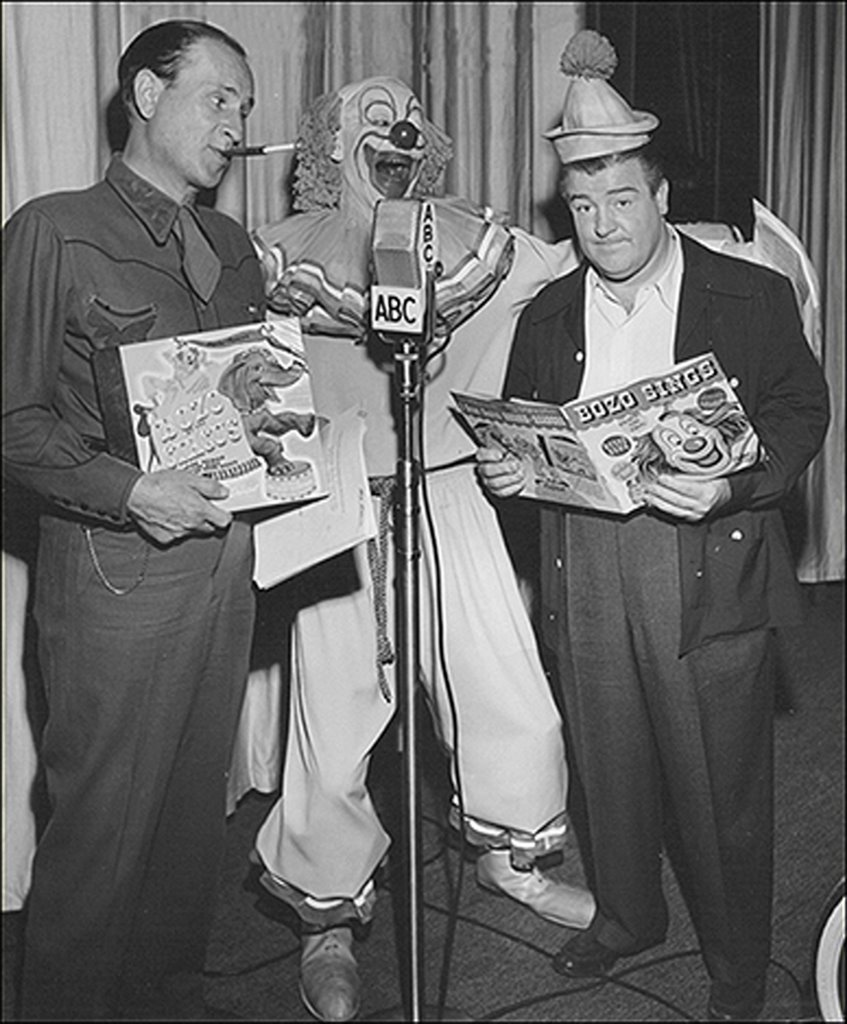
Bud Abbott, Pinto Colvig as Bozo and Lou Costello

Former circus clown, newspaper cartoonist, voice actor (the original voice of Walt Disney's Goofy as well many other cartoon voices), songwriter ("Who's Afraid of the Big Bad Wolf) and the original Bozo the Capitol Clown, Vance DeBar "Pinto" Colvig with two of the stage and screen's greatest clowns, New Jersey's own Bud Abbott and Lou Costello.

I got to spend some time with Dean "Elmo Gibb" Chambers after the Cole Bros. show yesterday and he told me (among a lot of other very interesting things) about being taught the art of being a good verbal Advance Clown from someone who had learned it from Pinto Colvig.

Sunday, August 20, 2006

Paul Wenzel


Paul Wenzel

A very talented clown and a master at making enormous collapsible clown props from silk and wire. The closest contemporary equivelent would be what Fred Garbo does now with his Inflatable Theater Company.

A veteran of many shows, he continued to troupe into his 90s. I wish he'd shared the secret of his prop-making technique with some students from the first few Clown College classes.