Sunday, November 05, 2006

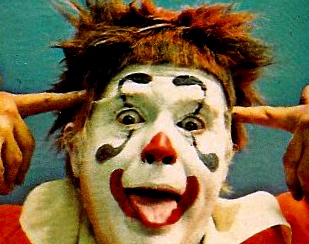
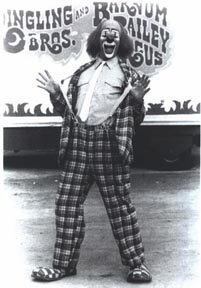
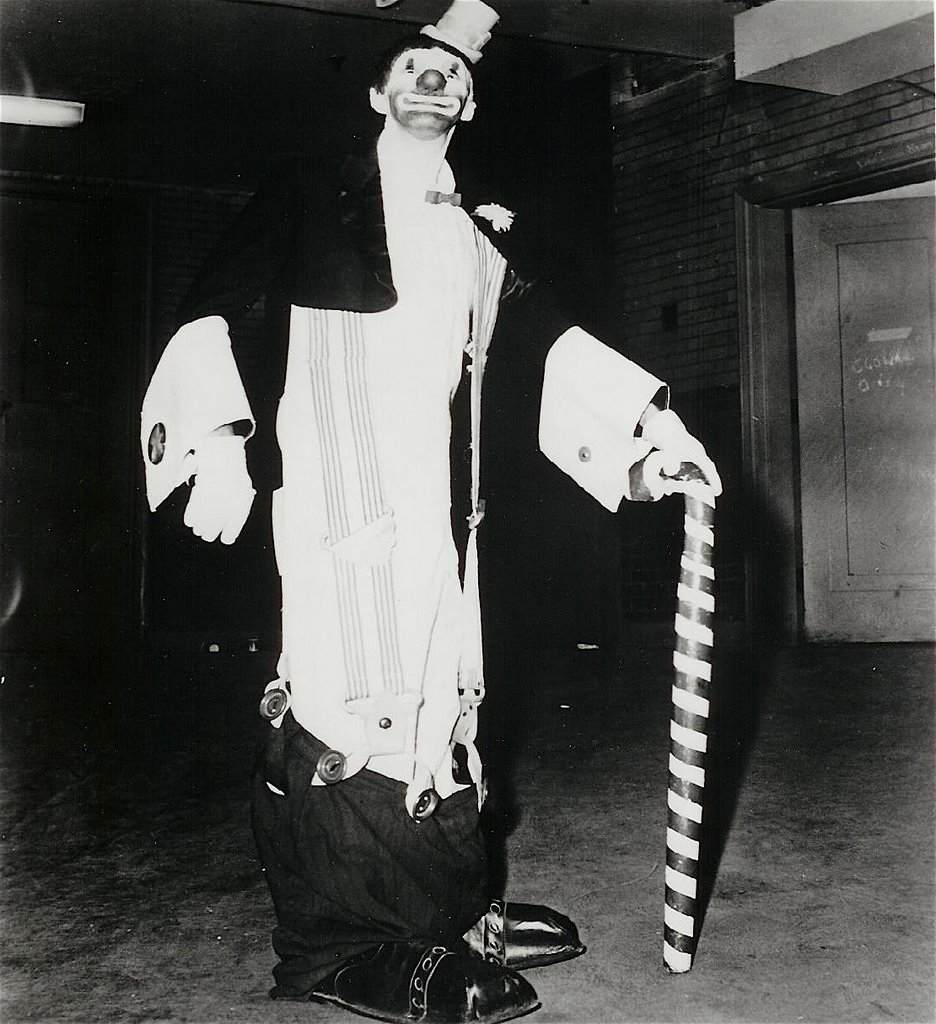
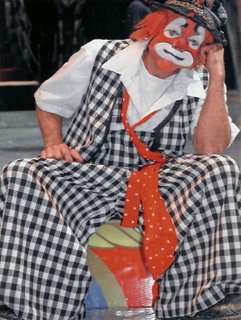
Felix Adler 1930


Here's an extra picture of yesterday's featured act, Felix Adler as a thank you to everyone for us posting such great numbers recently. Fridays and Saturdays are usually our worst two days, hit-wise, but we received the highest ever number of hits for a Friday and Saturday this weekend so I thought you all deserved an extra post.

Saturday, November 04, 2006

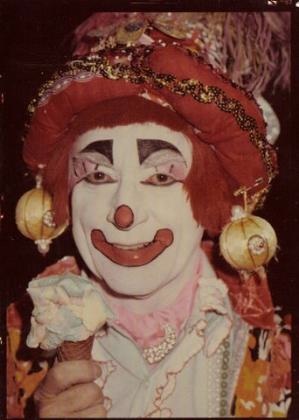
Felix Adler


Felix putting the finishing touches on his classic makeup in the 40s.


A smile for the camera as he finishes in a different photo session (but similar shirt) from the same era.


And "Funny Felix" is ready for the matinee in what looks to be the late 1930s.


The autograph of the "King of Clowns", Felix B. Adler.

1982 Bill Ballantine Interview


On the eve of the release of the book CLOWN ALLEY CBS radio's Don Swaim conducts a 21 minute radio interview with circus clown, writer, artist and, for 8 years, the Dean of the Ringling Bros. and Barnum & Bailey Clown College, Mr. Bill Ballantine.

http://wiredforbooks.org/billballantine/index.htm

Friday, November 03, 2006

Weirdest Program Cover EVAR!

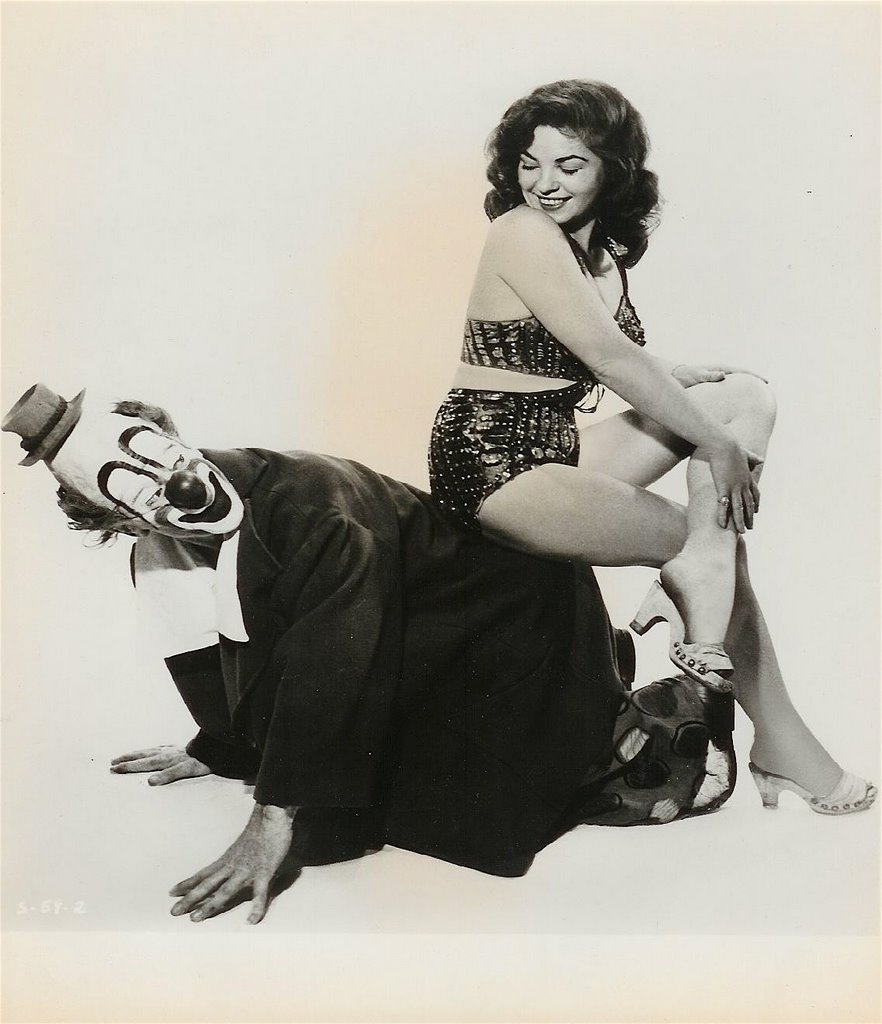
Photos of clowns and showgirls are among the most successful promotional tools a circus can use. An appealing, professional clown shows that the circus is a quality production with funny clowns to delight the kids while the beautiful, sexy, young showgirl is empowering for women while acting as eye candy for Dads. Something for everyone = ticket sales.

Somehow the idea got out of hand in 1961.

What follows is this...


Lou Jacobs, one of the greatest circus clowns of all time, with a beautiful showgirl seated on his lower back.

Weird, but not weird enough.

I think that the exchanged glance makes the photo unnecessarily suggestive.

Let's see if we can't take that out but still weird this up a little more...


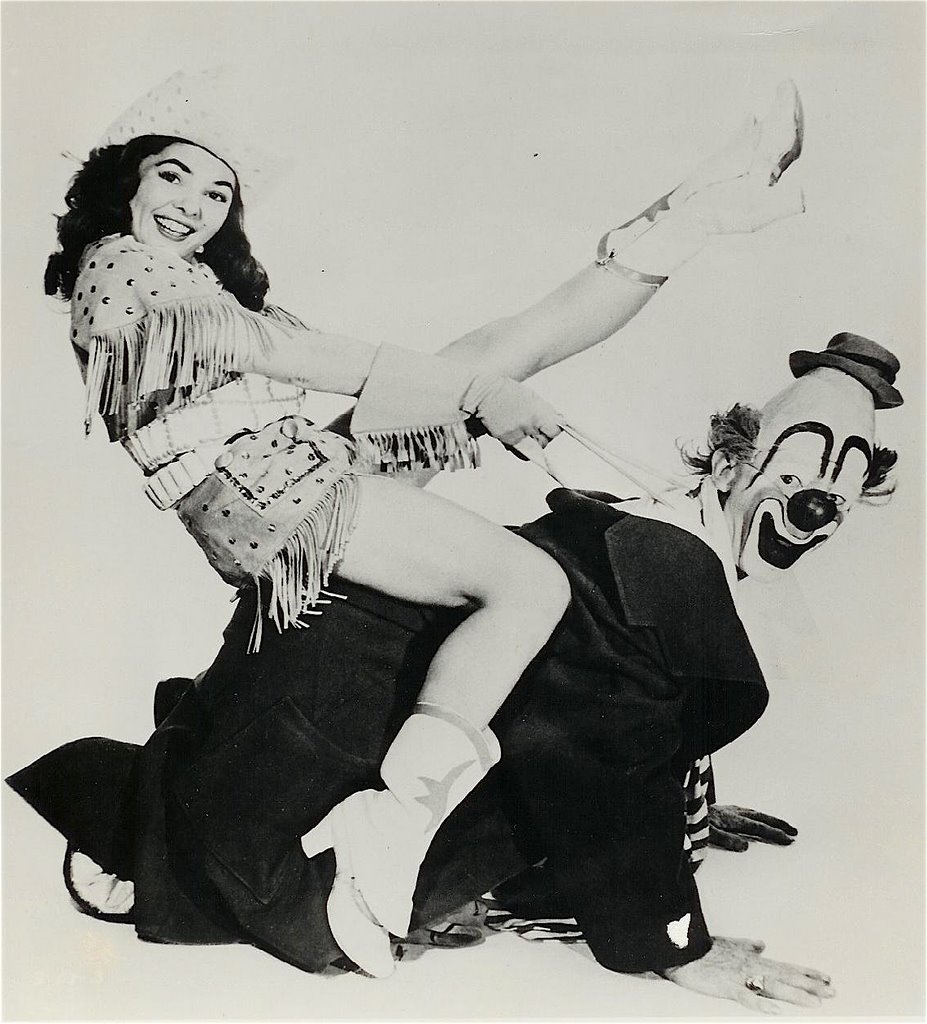
Let's change the showgirl's costume and make her a cowgirl riding on the back of the clown.

No glance.

Not openly suggestive as in the first picture, more playful but in a weirder sort of way.

This photo is pretty weird but I bet we can kick it up a notch and REALLY take this into a whole new realm of weird!


Here we go...

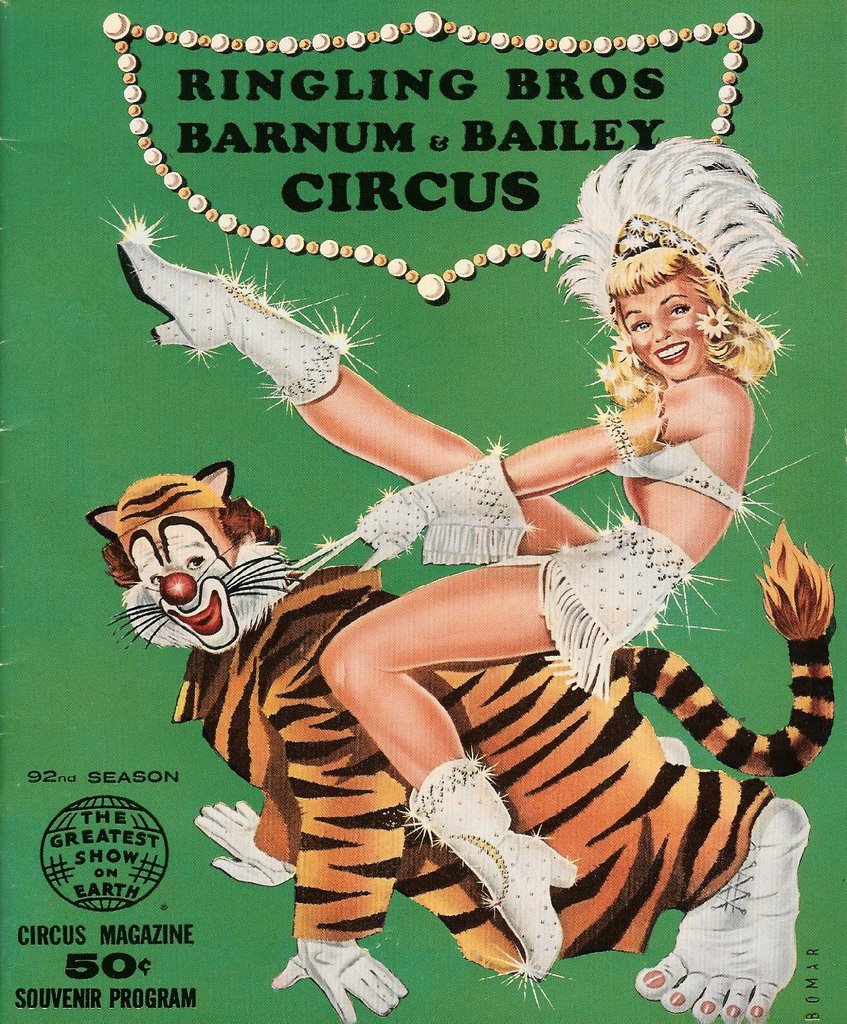
The beautiful showgirl is no longer a cowgirl but is now a blonde. Why? I don't know.

Lou Jacobs is now dressed as a tiger. Why? I can't even begin to imagine.


John Ringlin North made a few more odd program cover choices (Felix Adler on the cover of the 1967 program had passed away seven years earlier) before finally selling the show to Irvin, Israel and the Judge.

What weirder program covers could he have dreamed up had he kept the show longer?

Thursday, November 02, 2006

Chuck Sidlow


In the last week and a half FOUR people who's opinion I value greatly have separately taken me to task for NOT posting anything on Chuck Sidlow.

The only thing that has kept me from doing so is that I don't personally have any pictures of Chuck, not for lack of trying. I just haven't found any for sale but I searched around the web and came up with a few good ones.

These should give a brief overview of the career of a man who in 1977 went to Ringling Clown College fresh out of high school and quickly rose through the ranks to become, at 22 years old, the youngest Boss Clown ever in the history of the Ringling Bros. and Barnum & Bailey Circus. He stayed with the show until 1988 and then spent several years performing overseas.

For the last few years he has been back in the States and doing amazing work with Circus Sarasota and it's community outreach projects, especially Laughter Unlimited.

Ladies and Gentlemen, Children of All Ages...a very long overdue welcome to Mr. Chuck Sidlow.

Because who doesn't love a circus clown from New Jersey with an auguste makeup, big red nose and a bald-top wig with orange yak hair on the sides? Who I ask you???


For more info and photos of Chuck please visit:
http://doyleintl.com/hoesidlow/hoe-alt.htm


For more info on Circus Sarasota please visit:
http://www.circussarasota.com

Chuck in Whiteface


Chuck in whiteface at Circus Sarasota.

Chuck In and Out of Makeup


The esteemed Mr. Sidlow both in and out of makeup.

Chuck and Lou


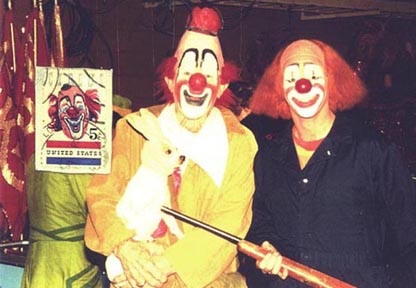
I'm not EXACTLY sure what's going on in this picture.

I think that it's supposed to be a gag where Chuck is threatening Knucklehead with a shotgun unless Lou gives him a postage stamp.

It's a bit more Tarantino-esque than most of Lou or Chuck's other gags and, despite their hard work, I doubt "Give Me a Stamp Or I'll Shoot Your Dog!" made it past Irvin at Winter Quarters.

; )

Chuck on Ringling


Chuck "back in the day" with Ringling.

Chuck on Circus Sarasota


Chuck in the ring with Circus Sarasota.

Chuck and Jackie


Chuck Sidlow and Circus Sarasota's "Ambassador of Goodwill" Jackie LeClaire, who sent me a very nice message the other day.


Jackie, I'm trying to get my wife to see what a great idea it would be for me to head down to Sarasota on the 11th and 12th for Circus Sarasota's clown workshop with Joey D'Auria and Robin Eurich. If I can get down there I'd love to stop by and visit.

Wednesday, November 01, 2006

Article on Mitch Freddes

Photo courtesy of Mitch Freddes


RINGED BY TRADITION
Despite some changes over the years, the unique lifestyle binds circus performers to each other and to their profession.

By Félix Alfonso Peña
Reading Eagle
READING, PA
October 26, 2006

Mitch Freddes was a First of May some 32 years ago when the camel spat on him and that was a good thing, he said.

“If a camel spits on you it's good luck,” said Freddes, who will turn 51 this month and has been a professional circus clown since 1974.

He wasn't too pleased about it at first, “But everybody said to me, ‘That's good. That means you've been initiated.' ”

Initiated or not, he was a First of May the traditional circus term for a neophyte to the veteran circus people until he finished the first year with Ringling Bros. and Barnum & Bailey Circus.

Freddes, who will be performing with the circus today through Sunday at the Sovereign Center, explained that May 1 was the traditional date when circuses started performing and touring every year.

“You really weren't accepted until you made it through one season to another year,” he said. “If you made it from one May 1 to another, you had made it.”

Finding an elephant hair from the tail which was unusual, Freddes said was also seen as an omen of good luck. Performers would often fashion a ring out of it to carry with them.

“And they used to say that if a tiger growled at you, that meant that he liked you,” he said. “That you were accepted.”

In the decades since that first year, Freddes, who later worked for other circuses and has since returned to Ringling Bros. and Barnum & Bailey, has always been a clown.

GREAT DEAL OF CONTINUITY

Looking back on his experiences, he sees some change in the circus world, but a great deal of continuity.

The tent is a thing of the past for Ringling Bros. and Barnum & Bailey, he said.

“We haven't been under a tent since 1956,” he said.

He also said many cities had built arenas that were suitable for circus performances, negating the need for hauling and erecting a canvas tent and offering the advantages of air conditioning.

But even as his generation he refers to himself as an old-timer is replaced by new people, circus people are still a closely-knit group, he said, because of their unique lifestyle and their extended time on the road, living and working together, and bound by tradition.

Among the traditions he cherishes are those related to clown alley, an area that dates back to the days of tents.

“Clown alley was behind the tent in the old days,” he said. “Since we used a lot of baby powder, we dressed in an alley so we wouldn't get powder on other costumes.”

“It was a very sacred place,” he said, where other people were seldom or never allowed. “No pictures were ever allowed in there; it was all kept very secret.”

IMPORTANCE OF RINGS

Other traditions highlight the importance of the rings to performers'
lives, he said.

“When you're sitting on the edge of the ring curb,” Freddes said, “you never turn your back to the ring.”

He explained that, rather than superstition, this is simply a show of respect for the area where they must all perform.

“Did you know that the diameter of the ring is 42 feet?” he asked. “It dates back to Roman times? That's the perfect distance that a horse can run around without putting too much strain on its legs.”

Whistling in the dressing room is seen as bad luck, he said, but it reflects a precaution taken in the days when riggers, who set up the rigging for aerial acts and more, communicated with each other by whistling.

“Whistling could be confusing,” he said.

Common sense dictated other rules, such as never facing backward during a parade.

“You need to look where you're going,” he said with a chuckle.

Accidents do happen in threes, he said: “But we don't harp on that too much. All of those things have just come down through the generations.”

Freddes does have what he refers to as a personal superstition, although even that is grounded in experience and precaution.

“Before I go into the arena,” he said, “I untie and retie my shoes. Twenty years ago I was in an act jumping over elephants. One time, I jumped over and broke my ankle. Now I always untie my shoes and tie them nice and tight.”

The circus tradition has become a family one for Freddes, whose parents were not circus performers, but musicians.

“When I was getting out of high school,” he said, “Ringling had a clown college. My mother read an article in the local paper, and she said this looks like something that would be good for you.”

Out of thousands of applications, he said, the college accepted 50, and of those, 10 made it into the show.

PROCESS OF ELIMINATION

“I made it through that process of elimination,” Freddes said. “Then my brothers got involved; they wound up coming into the show in 1975, and continued, working their way up through corporate channels.

“One of my brothers was a vice-president and retired last year. Another is still working.”

His son, 26, was raised on the road, Freddes said.

He said circuses always travel with a teacher for the children, who uses the traveling to good advantage through field trips.

“My wife works for the circus,” he said, “and my daughter travels with
us. She's 3. She's just starting to do some stuff in the ring.

“She's a natural.”

Citing the example of his mentor, Lou Jacobs, who was still performing at age 80 after 60 years as a clown, Freddes looks forward to many more years in the ring and the limelight.

“After all these years, clowning, I call it a career,” he said.

“There's nothing else I would rather do. Some of the things you can't beat are the freedom, the traveling. As many times as I've been around this country and around this world, and things change, it's still beautiful.”

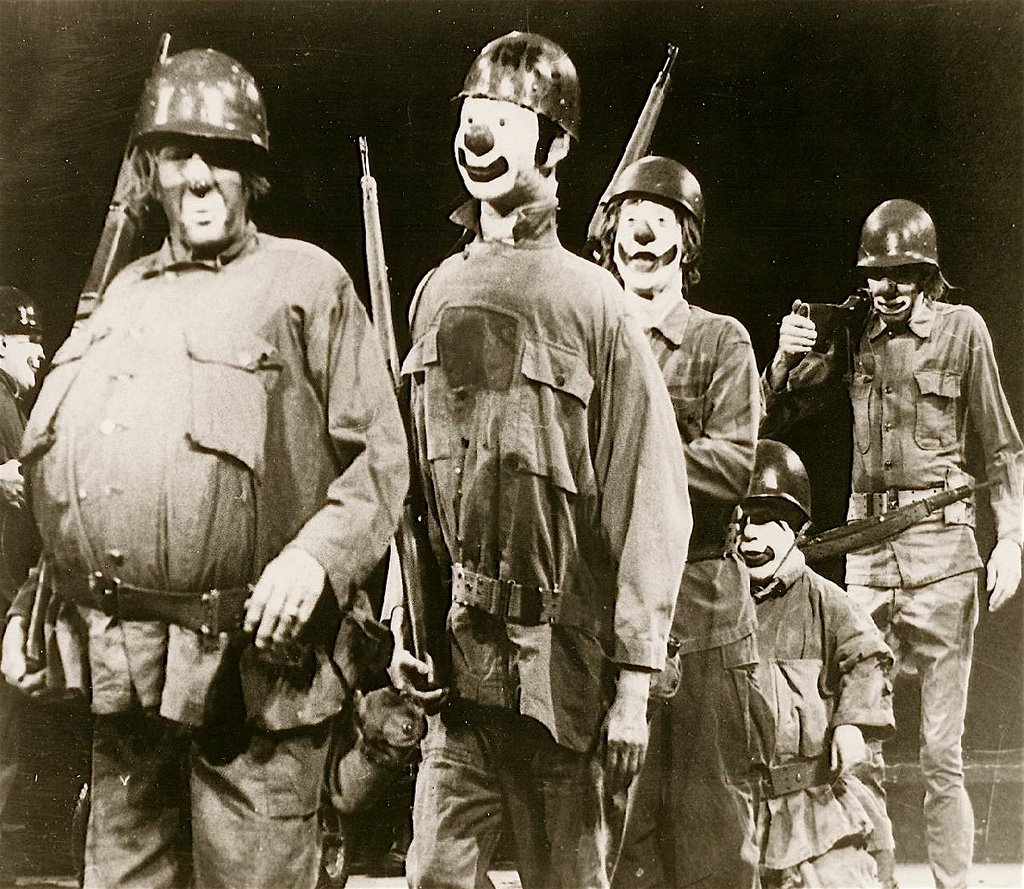
Paul Jung's Army Gag


One of Paul Jung's greatest successes as a Producing Clown was his Army Gag, a fixture of postwar American circus clowning both on Ringling (where Jung himself did it) and on other shows (where others adapted it).

I'm not sure who the tramp in the front of the photo is or who is about to have his paper-mache head knocked off (this head was displayed, unlabeled and unidentified in the Ringling Museum of the Circus in Sarasota when I visited there in 1997) in position number two but they are followed by Jung himself, Prince Paul Albert and Gene Lewis. If you look to the left I believe that is Dennis Stevens in the distance.

The gag was performed to great acclaim for about 20 years (1945-1965) but died out due to two unfortunate factors, Jung's untimely death in 1965 and the Vietnam War.

It's unlikely that it would be revived anywhere but Ringling today since no American shows currently tour with a large enough and/or capable enough Alley.

I believe Irvin Feld put an official moratorium on the gag when he purchased the Ringling circus, one that has held throughout the Feld "stewardship" of that show. I don't see any reason for the moratorium to continue today as support for our troops here at home is almost universally unquestioned and the characters don't necessarily HAVE to be soldiers. They could be Boy Scouts, Girl Scouts, police, firemen, ushers, security guards, life guards, janitors, circus ring crew or just about anything.

Change the Army fatigues for Boy Scout uniforms, the guns for shovels and 90% of the gag could be done with no objection or controversy tomorrow.

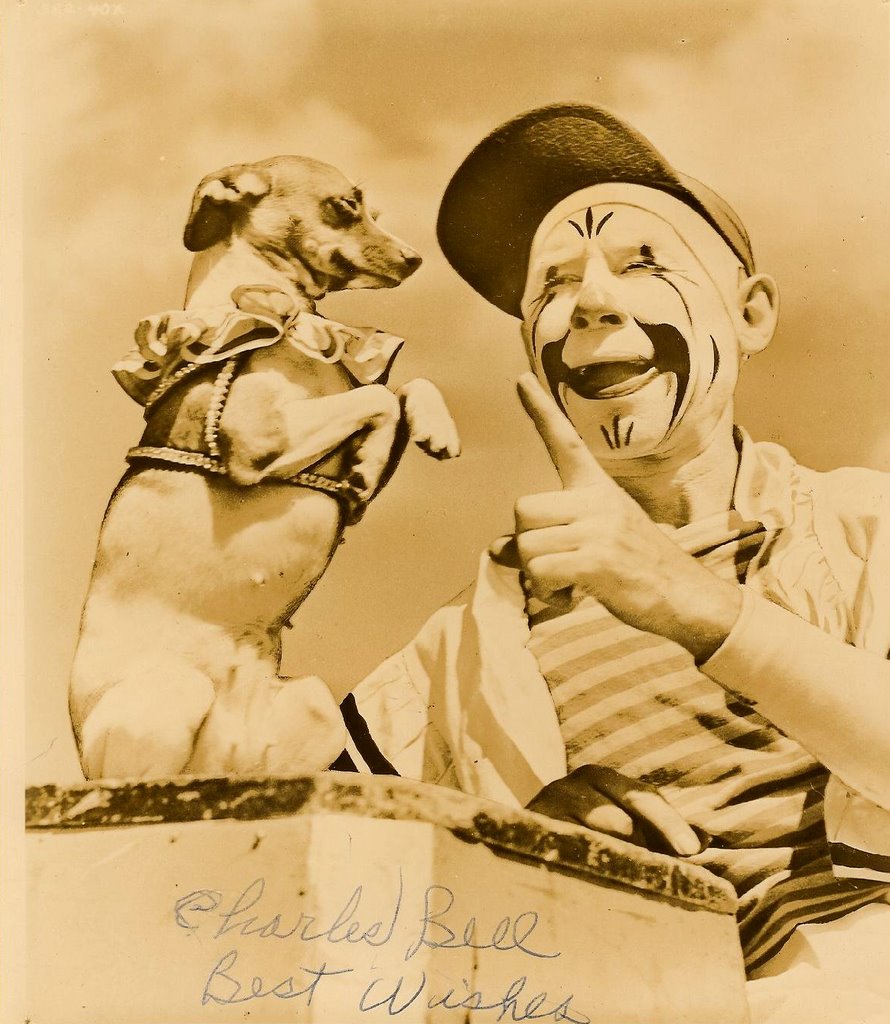
Charlie Bell


Two shots taken of Charlie Bell and Peanut from what appear to be the same Ringling photo session circa 1944.

The top one is an autographed photo from my collection, the bottom comes to us from the collection of Harold Barbour.

Circus America


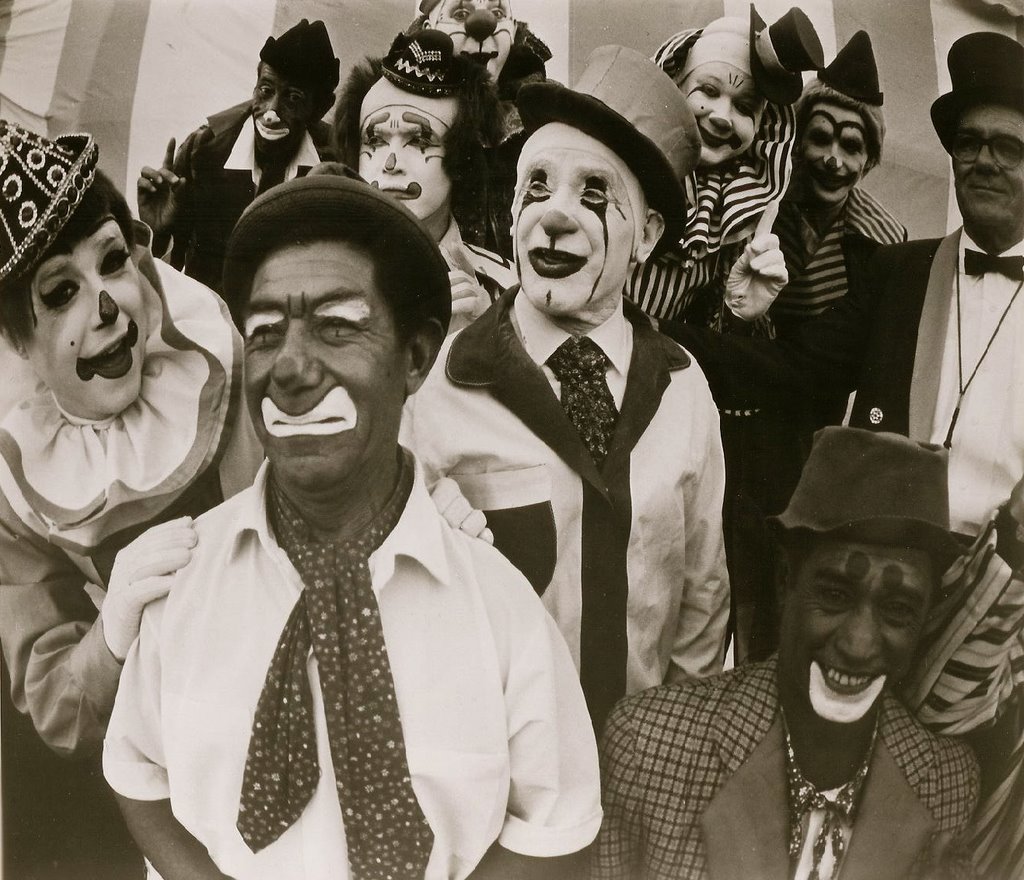
Once Upon a Time In America...great herds of circus clowns roamed the countryside, performing together in groups, in their natural habitat of cotton candy-scented arenas and tents to the amusement and delight of audiences of "Children Of All Ages".

Sadly, those days are gone.

But we have photographs, like this one from the program of Circus America, Paul V. Kaye's massive one-shot at the Capital Centre in Washington, D.C. back in 1974.

The show's Alley boasted Emmett Kelly, the producing clown talents of Alf Landon, Gene Randow and Max Craig and an collection of giants (according to these photos) including Ernie "Blinko" Burch, Chuck Burnes and Albert "Flo" White performing such classics as The Dentist Gag, seen in the top photo.

Tuesday, October 31, 2006

Happy Halloween


Happy Halloween from Jerry Bangs and the Alley!

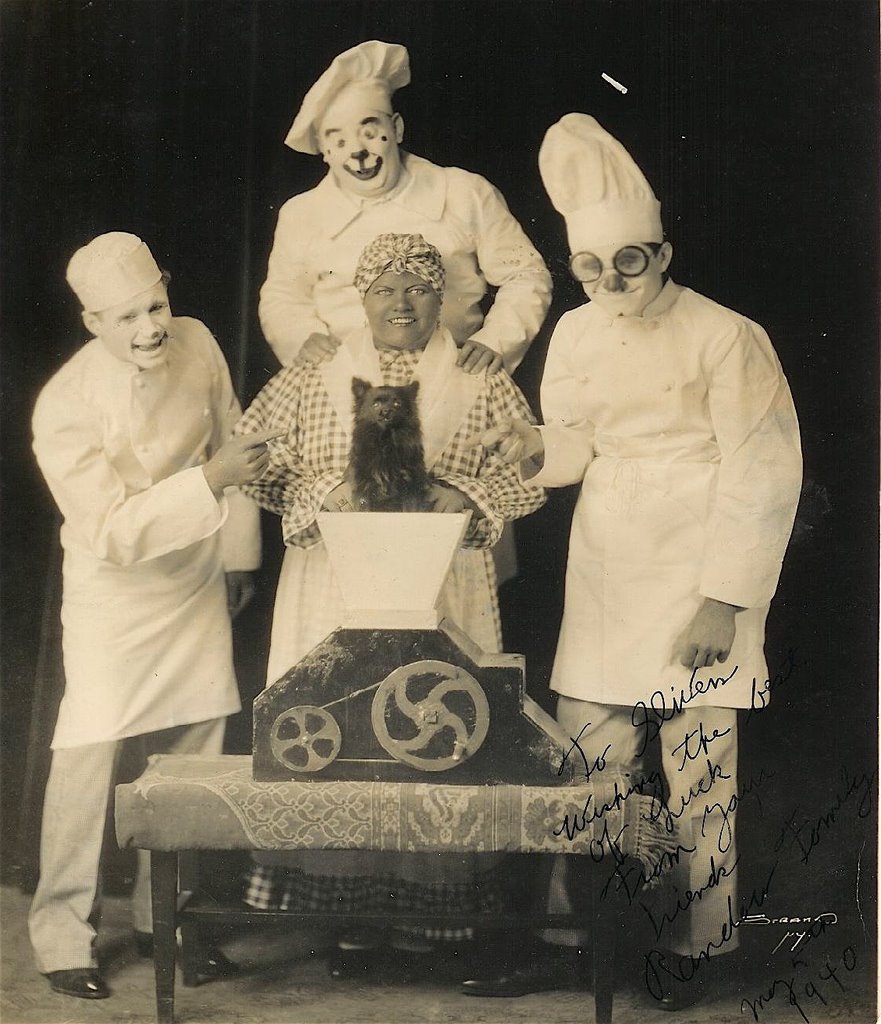
The Randow Family


A nod to the Grand Guignol for Halloween...

Here is a photo of the Randow family (presumably before Gene Randow switched to tramp makeup and set out on his own) inscribed to Slivers Johnson. My guess is that Gene is the whiteface on the right.

It looks to be a variation on Joseph Grimaldi's Sausage Machine but why in the world would you four people to do a quick gag like that and just how does the stereotypical "Mammy" character figure in?

Is she Mrs. Butterworth? Does she bring syrup for the sausages?

I've seen Shrine clowns do this gag and bring kids to tears with worry about the dog. I just don't see a way to do this for kids today without the clowns seeming inhumanly cruel but I'm sure that the Randows were rocking 'em with it back in the day.

Gene Lewis


My new favorite picture of man-about-town Gene Lewis, steppin' out in all his sartorial spendor.

Roy Barrett

Photo courtesy of the Pfening Circus Archives


Roy Barrett with an unidentified woman on the Hagenbeck-Wallace Circus in 1938.

Dig that craaaaaaaaaaaaaazy starched wardrobe!

Otto & Billy


Former Hodgini bareback rider Otto Griebling and former flyer Billy Ward with then current Leah Cohen in an undated photos from the 1960s.

Monday, October 30, 2006

Ringling Gold Unit: Reading is Fundamental

I have to very sincerely thank my Clown College instructors Tom Dougherty and Jon Weiss and my new friend Mitch Freddes for one of the warmest receptions that I've ever received and one of the best circus experiences that I've ever had.

I left Reading, PA with a heart swelled so full I thought that it would burst out of my chest.

I haven't seen a Ringling arena show since I left the Red Unit in '99 so this was a wonderful homecoming. For all the show's strengths and weaknesses, it really is the direction that I think Ringling should be moving in; talent heavy one ring performances. The show has a personality and feel that a three ring show just can't offer and that is due, in LARGE part, to the efforts of it's comedy stars, Tom, Mitch and Jon.

Their work here is exemplary. The show truly is "world class" and these three deserve a lot of praise:

Tom Dougherty is simply one of the greatest clowns working anywhere, at any time... ever. I thought that he was brilliant when I first saw him at Clown College nine years ago and the work I've seen him do since impresses me more and more. His skill at working with audience volunteers in TRULY improvisational situations is genius. A true "clown's clown".

I haven't seen Mitch Freddes in action since I was a kid and seeing Mitch yesterday put me right back there. Mitch is a clown, pure and simple. With every fiber of his being, Mitch Freddes is a classic American circus clown. He's the kind of clown you don't see enough of anymore and the kind of clown I'd like to be: no "spaghetti", no wasted gesture. Every moment in the arena you know you are watching a very rare, magical and wonderful commodity: a "real clown". The charm, pace and strength of his character remind me of Barry "Grandma" Lubin and an older Charlie Rivel. I hope that, like Mike Naughton, I'll be able to take MY grandchildren to see Mitch perform "down the road".

Jon Weiss has the hardest job of the three. He has the Herculean task of keeping his energy level at full throttle for the better part of three hours. Those of you who've met Jon know that he's completely capable and up to the task but still, maintaining that performance level on a two or three show day is absolutely awe-inspiring. The other thing that makes Jon's job all the more impressive is the amount of dialog he's required to remember. He's got a lovely co-host in Liliana Escobar but it's Jon's personality, character and energy that largely fuel, drive and define the show.

I just wish that the production team would abandon the decision to have Jon and Liliana make conversational announcements during the acts. I really think that it takes the audience out of the moment and greatly diminishes the "live" experience of watching a circus, but that's just MHO.

Tom Dougherty told us on his last day of teaching at Clown College '97, "When we meet again it will be as colleagues...as fellow clowns." Yesterday I got to meet up with three of my most dedicated and passionate colleagues and I thank them for a great time and a great show.


I forgot to bring a camera with me yesterday so here are some photos that my friend Mike Naughton sent me a few weeks back to illustrate the wonderful time that I had in Reading...


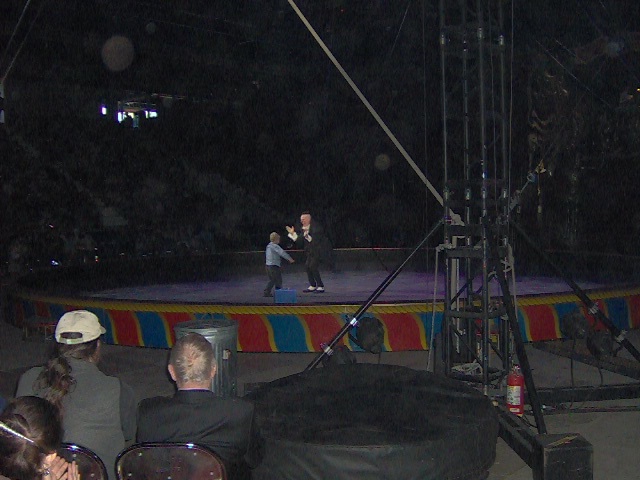
Tom Dougherty welcomes the next generation of circus stars into the ring: Mike Naughton's grandson, Joey.


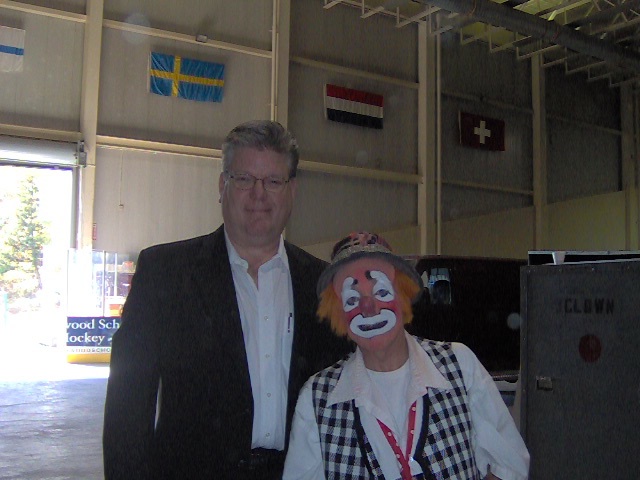
A reunion of members of the Clown College class of 1974, Mike Naughton and Mitch Freddes.

No, Mike is not standing on a box and no, Mitch is not standing in a hole. Mike Naughton, owner of the Yankee Doodle Circus (yankeedoodlecircus.com) stands an astonishing 7' 3" tall!


Mike with the "man who holds it all together" and the woman who holds HIM together, Jon Weiss and his radiantly beautiful wife who hasn't aged a day in the last nine years, Laura Weiss.

I hope to see you all again in Binghamton!

Sunday, October 29, 2006

Saturday, October 28, 2006

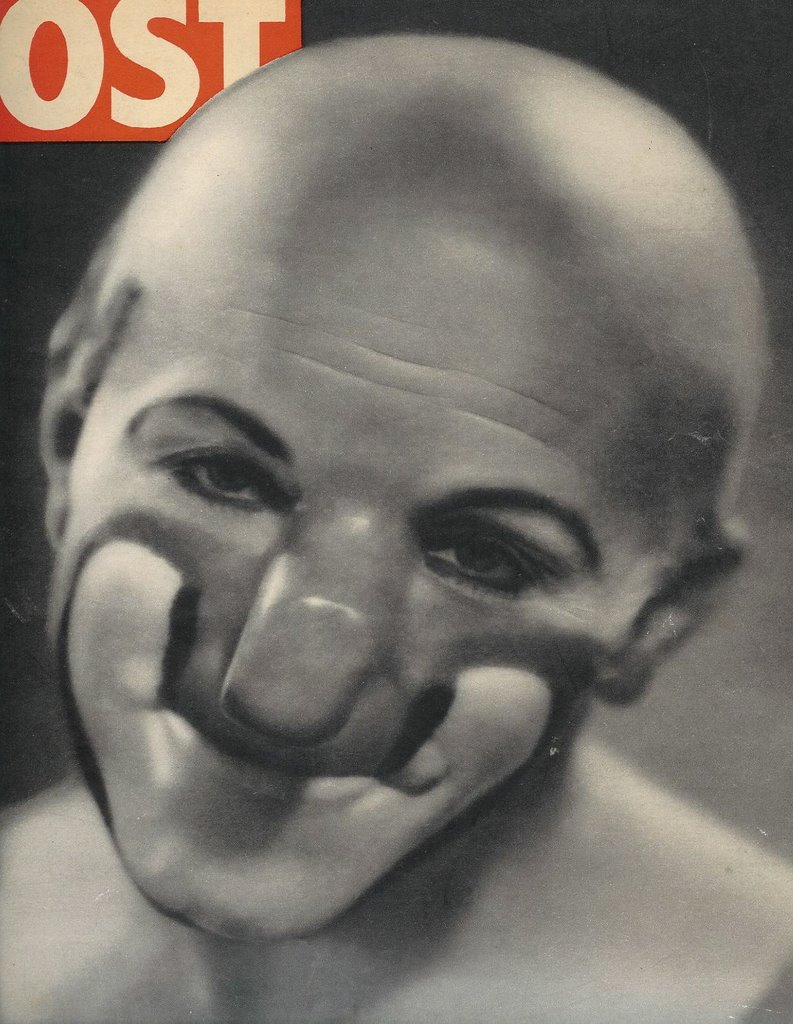
Rivel at Olympia


Charlie Rivel from the cover of the Picture Post dated December 31st, 1938, the year he was the clown at Olympia.

"Akrobat Schoooooooooooooooooooooon!"

Wilson and Randow


Dime Wilson and Gene Randow get ready for a Shrine date in this undated photo from the archives of the La Crosse Tribune, La Crosse, WI. Photo by Harry Larsson.

The Prince and His Subjects


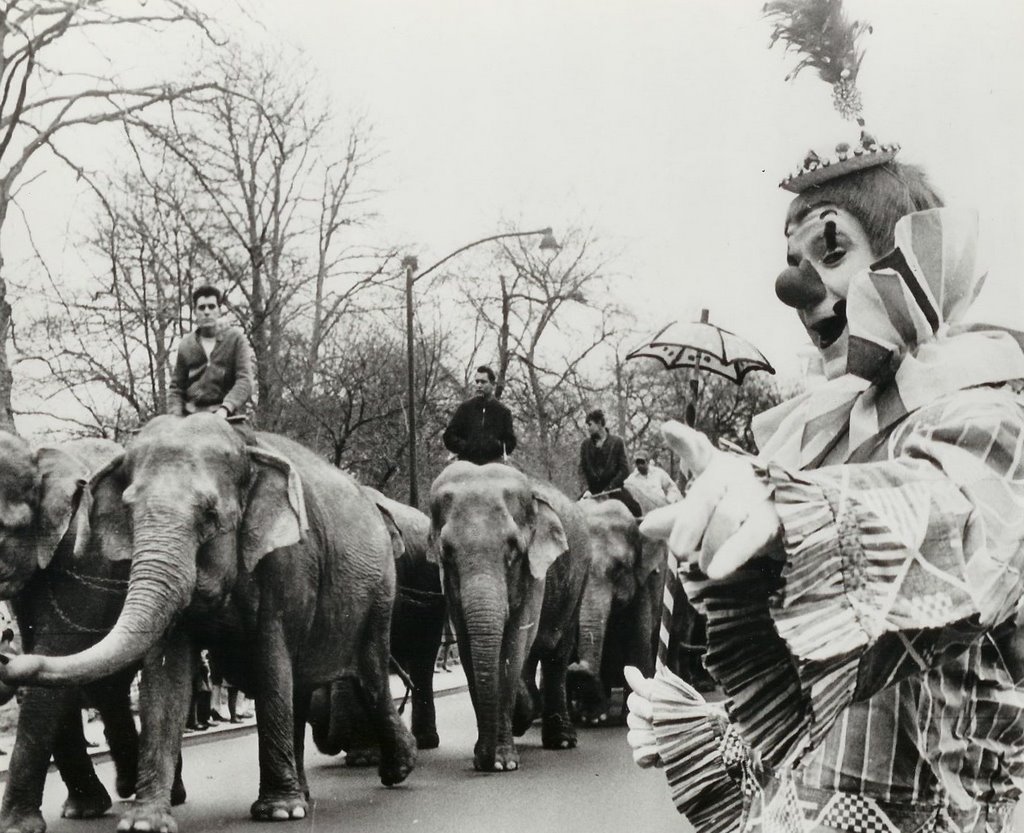
Prince Paul surrounded by schoolchildren (from Venice, FL?) in this 1967 Ringling publicity photo taken by Zack Bloom.

Friday, October 27, 2006

CBCB Alley


The classic Clyde Beatty-Cole Bros. Alley photographed in what appears to be a doorknob's reflection.

I can ID Kenny Dodd, Lou Nagy, Jimmy James and Buck Nolan with Bernie Kallman peeking in way up top.

I believe the whiteface with the curly sided bald top wig is Larry Burkett.

Bernie, I hope you'll be kind enough to help out with the rest...

Jackie LeClaire


Two of my favorite pictures of one of my favorite people, Jackie LeClaire.

I believe that these both date from the early 60s when Jackie was doing advance work for the Ringling show.

Imagine... Kennedy may have been in the White House, The Beatles may have been on Sullivan, Lenny Bruce may have been off somewhere saying a dirty word... but you'd never know it from these timeless images of a classic circus clown.

These could have been taken in 1927 or yesterday morning.

A clown is a clown.

Thursday, October 26, 2006

Lazlo Donnert.


Yesterday we got a very nice message from Lazlo "Laci" Donnert, grandson of Lazlo Donnert, a pmember of the Ringling Blue Unit Alley from the late 60s through the mid 70s.

I had the pleasure of working with Lazlo and his family on the Red Unit in 1999. He was always very nice to me and even allowed me to play with his dogs each day before the show. I was missing my own dog while on the road and Lazlo understood.

We had the chance to have a few long conversations and Lazlo enjoyed having someone from the Alley to talk about the old days with. He was very generous in sharing stories about his time working alongside Doug Ashton, Frankie Saluto and Otto.

Laci, can you give us a little biographical material on your grandfather?

And please tell him that we all say "Hello"!

Chuck Sateja

Photo courtesy of Donald Stambaugh


Here's the description from Donni...
_____________________________________

Here is a pix of Chuck Sateja taken on the All Star Clown Revue in a mall in Boston Mass. The manager of an ice cream store asked Chuck to front his new Rainbow ice cream flavor Chuck being a lover of ice cream cheerfully agreed. This was in early 70s. Chuck was flamboyant & funny clown spent many years on Ringling with friend Bobby Kaye & that group-------Donni

Polack Alley from the '60s

Photo courtesy of Bill Strong


The 1963 (possibly '64) Polack Bros. Clown Alley are, L to R, : Johnny Cirliano, Peluza, Dick "Rocko Lewis, & Al Ackerman.

The woman in the center of it all is Joanne Pinson , when she was on Polack with The Flying Ray-Dens.

This photo would have been towards the end of Dick Lewis' career. Not too long after this he would break his neck in the ring performing his table rock act.

Wednesday, October 25, 2006

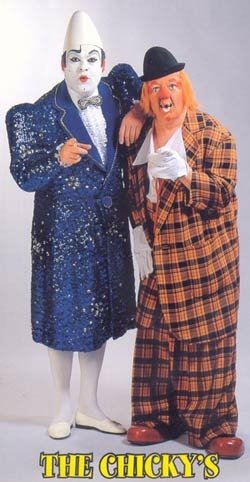
Highbrow Paper on the Chickys' Mirror Entree


I wonder what the Chickys themselves would make of this?


http://links.jstor.org/sici?sici=0886-7356%28199302%298%3A1%3C117%3AMSAT%22M%3E2.0.CO%3B2-T&size=LARGE


Otto Griebling


Otto Griebling, an artist alone in his field.

OK, it's not so much a field as it is the backyard of a circus but you get the idea.


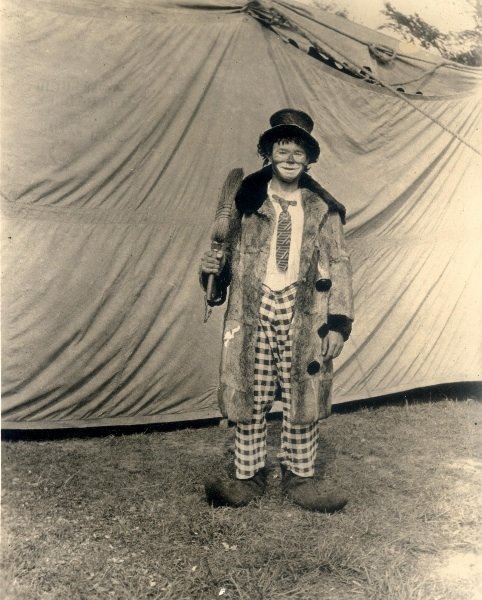
Billy Lerche

Photo courtesy of Bill Strong


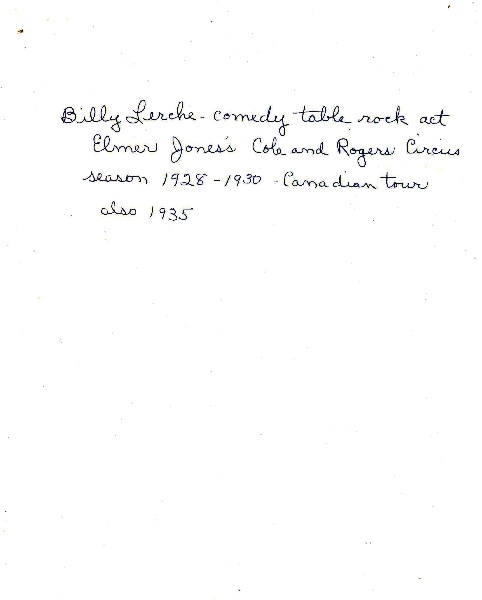
Billy Lerche, about whom I know nothing except what was written on the back of this photo.

He looks like he could be a distant relative of Bindlestiff Keith Nelson's Mr. Pennygaff.

Tuesday, October 24, 2006

Buck Baker


Myron "Buck" Baker (you didn't think his momma named him "Buck, did ya?) was born in 1873 and died in Washington July 6th, 1943.

From 1902 until 1907 he appeared in vaudeville as a trick bicycle rider. In 1908 he joined the Ringling Bros. Circus and subsequently worked on the Walter L. Main, Morris & Rowe, Gentry, Bailey Bros, and Hagenbeck Wallace circuses.

He was a prolific Producing Clown specializing in several trick automobile gags. He may have invented the "second driver" car that seems to drive by itself, the kind used by the Wiswell and Cook families for many years. He also created an early version of the bathtub that Lou Jacobs made famous. There is also strong evidence that he created that absolute all-time classic of three ring American circus clowning, the Firehouse Gag.

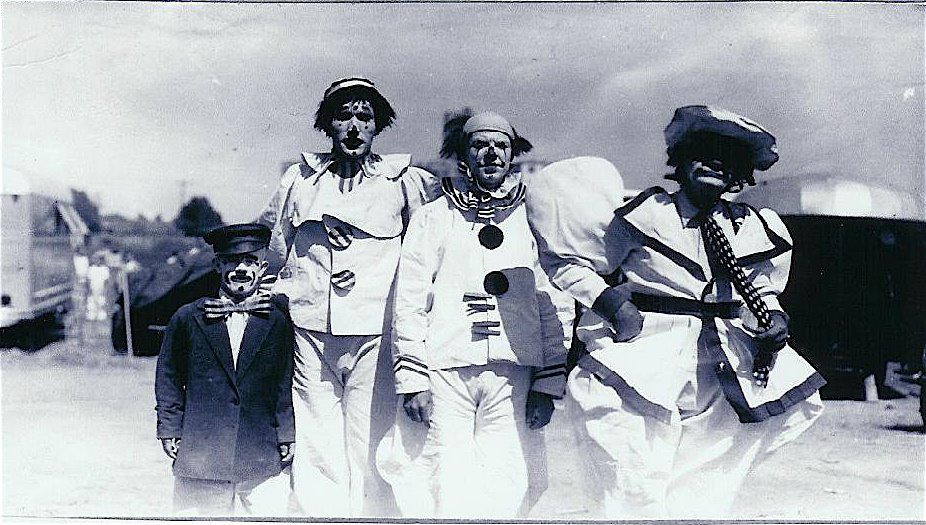
Because there are more photos from the Last Supper than there are of Buck Baker, I'm using my meager detective skills to deduce that he is the clown on the far right with his face (frustratingly) obscured by his hat.

This photo is from the Pfening Archives. Fred has this photo ID'ed as "BAKER, BUCK WITH CLOWNS" and has neatly typed "BAILEY BROS. CIRCUS (HARLEY SADLER) WITCHITA FALLS TEXAS 9/11/35) " under it. Included with it is Buck's obituary from his local newspaper so it's on good authority that I'm accepting that Buck is one of the four clowns in the photo.

Now, Buck Baker wasn't a "little person" so that eliminates the man on the far left, He could be either of the two gentlemen in the center of the photo but Buck would be about 62 years old when this photo was taken in 1935 and neither of those men look old enough to be 42 much less 62.

Therefore, if this is a photo with the elusive Mr. Buck Baker in it, it's my guess that he's the cat in the hat.

If anybody out there has a better photo of Buck, PLEASE let me know!

Doug Ashton?


We've had a lot of international visitors recently.

Folks from all over Europe, Asia, the Middle East, South America and even South Africa have found us here in the past few weeks but we have one person in Australia who is looking in almost every day.

I'm wondering if it might be Dougie Ashton, seen above with Michu, Tim Torklidson and (hiding in the back) future Dean of Clown College, Ron Severini in whiteface.

I just worked with Doug's nephew, Mike Ashton, his wife Sue and their beautiful new baby. Mike told me that Doug is back in Australia with a gig in a seaside resort town. If you're out there Doug, please drop me a line!

Monday, October 23, 2006

John Cooper on Charlie Cairoli


Where to begin? What to leave out?

I suppose the start is obvious.

Hubert Jean Charles Cairoli. (Some sources have it as
"Jean Hubert Charles".)
Born: Milan, Italy. 15 February 1910.
Died: Blackpool, England. 17 February 1980.

A friend of mine once heard a girl tell Charlie that
he wasn't a real clown, probably because she believed
a real clown had a heavy facial make-up. His response
was "Oh!", and a big smile.
If Charlie Cairoli wasn't a real clown, then there is
no such thing as a real clown.

Whilst he was born in Italy, his parents were both
French, and it was their only visit to that country.
Charlie made his ring debut at the age of 7, and by
1929 he was working at Cirque Medrano in Paris,
France, in an act with his father (Jean-Marie) as
white-face, and the celebrated auguste, Porto. By this
time, Charlie was known as Carletto. The Cairolis were
to remain at Medrano until 1937, Charlie's elder
brother, Filip, replacing Porto along the way.

For much of that time, the other major Parisian circus
building (Cirque d'Hiver) featured Les Fratellini.
Naturally there was professional rivalry (and respect)
between the two star clown trios, and each sent family
members to the other building to spy on their
competitors.

Charlie would notice the frequent presence of one
particular charming young lady in his audience, so
made sure he met her. He discovered that her name was
Violette. Violette Fratellini. Her father was Paul.
The result was marriage (despite some initial
opposition from both families) and, subsequently, 3
children (2 daughters and a son).

The year 1939 found the Cairolis at Blackpool Tower
Circus, where they were very successful. Filip
returned to France when war broke out, but father and
younger son stayed on in Britain, often billed as The
Cairoli Brothers when working in variety when the
circus wasn't operating. Having been born in Italy,
Charlie was interned towards the start of hostilities,
but eventually he would perform 2 shows each day - and
then spend the night working in a munitions factory.

Charlie Cairoli remained a fixture a The Tower until
his retirement at the end of the 1979 season, a season
during which his health had not been good.

"Johnny" Cairoli retired in 1947, after which Charlie
worked with 4 different white-face clowns, namely Paul
Freeman, Paul King, Paul Conner and, to complete the
circle, Charlie Cairoli Jr. (The photo with the
posting on 8 July shows Paul King.)

Featured prominently, there would often be a brilliant
stooge called Jimmy Buchanan. Jimmy worked absolutely
straight-faced. Dead pan. Even whilst his nose or ears
were severely tweaked - and with a mouth full of
water.

Violette Cairoli and Jimmy Buchanan have both departed
this life.

However, Charlie Junior still works as a clown,
although he took some time out from circus, and
dropped the "Junior" a while ago. Of late, he's been
in and out of hospital, so is resting as I write. He
and his wife Claudi (more formally Claudette) have 2
sons - Charles and Alexander - who have little or no
interest in show business.

I know that a grandchild of Filip Cairoli was living
in the US some 10 years ago.

That tells you something about the man and his
colleagues. In due course, I'll tell you something
about his work.

John Cooper.
England.

Onionhead


Robert "Onionhead" Dunn who has been touring with the UniverSoul Circus since 1996.

Sunday, October 22, 2006

Sunday Night at the Movies: Chaplin's THE CIRCUS 1928


If The Circus is one of Charlie Chaplin's lesser-known films, it's only because of bad timing. Made right after The Gold Rush and just before City Lights, this unjustly underrated silent tends to get neglected out of deference to the two other films. While it may not be a cinematic masterpiece, nevertheless, it's a beautiful film and perhaps more personal that anyone might have suspected at the time and is one of the funniest, most purely entertaining of Chaplin's features.

The film opens on a circus where the ringmaster is an abusive bully, the clowns are desperately unfunny, and the audiences are growing smaller and smaller. As act after act bombs inside, the Little Tramp is outside, blithely enjoying the boardwalk until a cop mistakes him for a pickpocket and gives chase. When the Little Tramp runs into the circus' center ring, he quickly has the audience in stitches with his efforts to ditch the cop. Knowing a good thing when he sees one, the ringmaster offers the Tramp a job, only to discover that he's only funny when he isn't trying.

This is merely the film's setup, encompassing the first 20 minutes or so, and already it includes some moments of Chaplin genius: a chase through the fun house, the Tramp's first moments in front of an audience, the absolutely hilarious audition sequence where the Tramp reinterprets some classic clown routines. Still to come is the romance with the ringmaster's daughter, and the rivalry between the tightrope walker and the monkeys in the scene above.

The trick comes when the ringmaster (Allan Garcia) decides to keep Charlie on as a prop master, but without letting him know that he's actually the star of the show. Eventually he discovers his stardom and must appear "funny" on purpose. But when a new tightrope walker (Harry Crocker) joins the show and the girl falls in love with him, a heartbroken Charlie finds that he can't make the audience laugh anymore.

These three stages may represent for Chaplin some kind of comedy evolution. At first he makes the audience laugh without trying, then he must try, then he turns serious. Certainly every film he made after The Circus had some kind of serious element to it, even if he never again made an all-out drama like A Woman of Paris (1923).

Chaplin's film shoots were never easy, but The Circus was particularly plagued by problems. The first 19 days of shooting were destroyed in a lab accident; it rained incessantly; the main set burned to the ground; Rudolph Valentino died; and Chaplin's 18-year-old wife sued him for divorce, forcing the entire film to be put on hold for eight months.

While waiting for the set to be reconstructed after the fire, Chaplin kept working, quickly devising a sequence when the Little Tramp goes out for dinner. Although he shot hundreds of takes, Chaplin would never bother to edit them into a scene for the final movie. Presented on the recent DVD reissue as a collection of unedited takes, "The Unused Footage" gives us a rare opportunity to watch Chaplin at work. Banging his cane on the floor instead of yelling "cut," Chaplin does take after take, slowly exploring the comic possibilities and making things up as he goes along. It's surprising to realize how much of Chaplin's humor was created on-set and the fact he hates to leave the center of the screen.

For hard-core Chaplin fans, the production lasted 637 days and they only actually shot film on 170 of those.

Largely free of the pathos and overwrought melodramatics that contemporary audiences have a hard time accepting, The Circus is simply about being funny. Of course, since it's Charlie Chaplin, it's brilliantly funny. At the first Academy Awards in 1928, Chaplin received a special Oscar for "versatility and genius in writing, acting, directing and producing The Circus." That may be one of the best decisions the Academy has ever made.


Edited from D.R. Jones review found on reelmovie.com and Jeffrey M. Anderson's on combustiblecelluloid.com

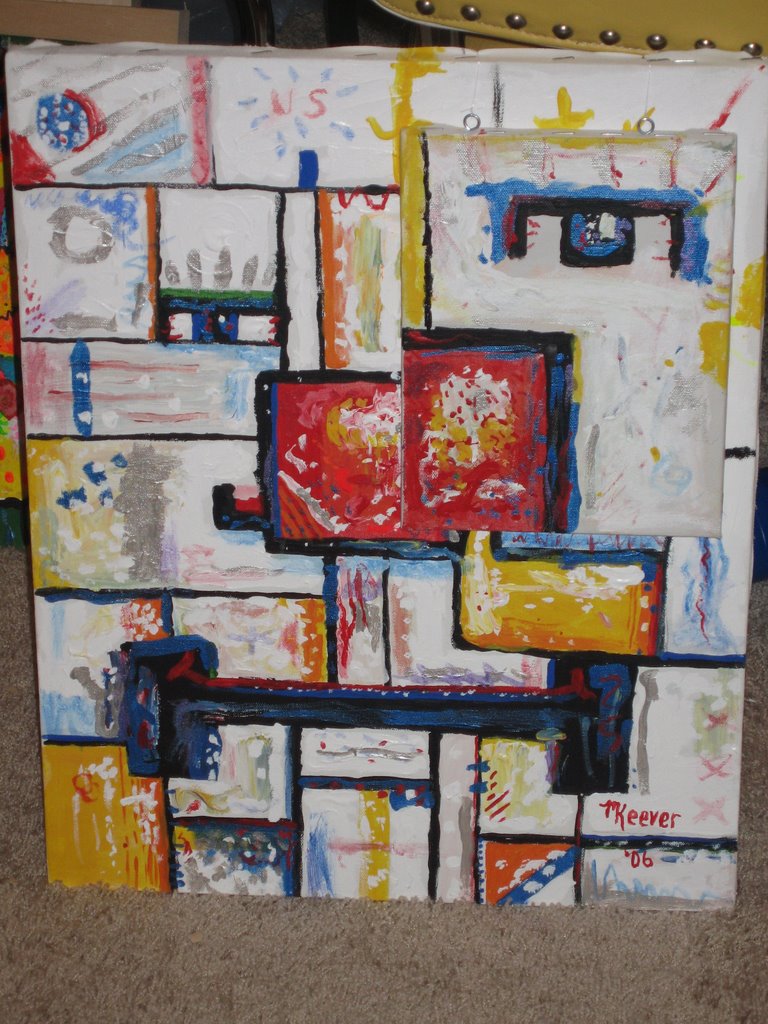
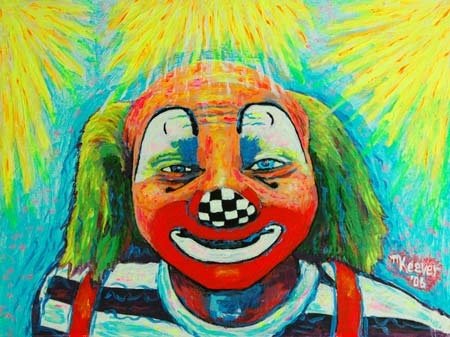
Sunday Morning Art Gallery w/ Cowboy Mike Keever


"Extreme Closeup" a self-portrait by Mike Keever


"My Friend Jummy Graham is Heaven Sent" a portrait of Jimmy Graham by Mike Keever