Saturday, August 26, 2006

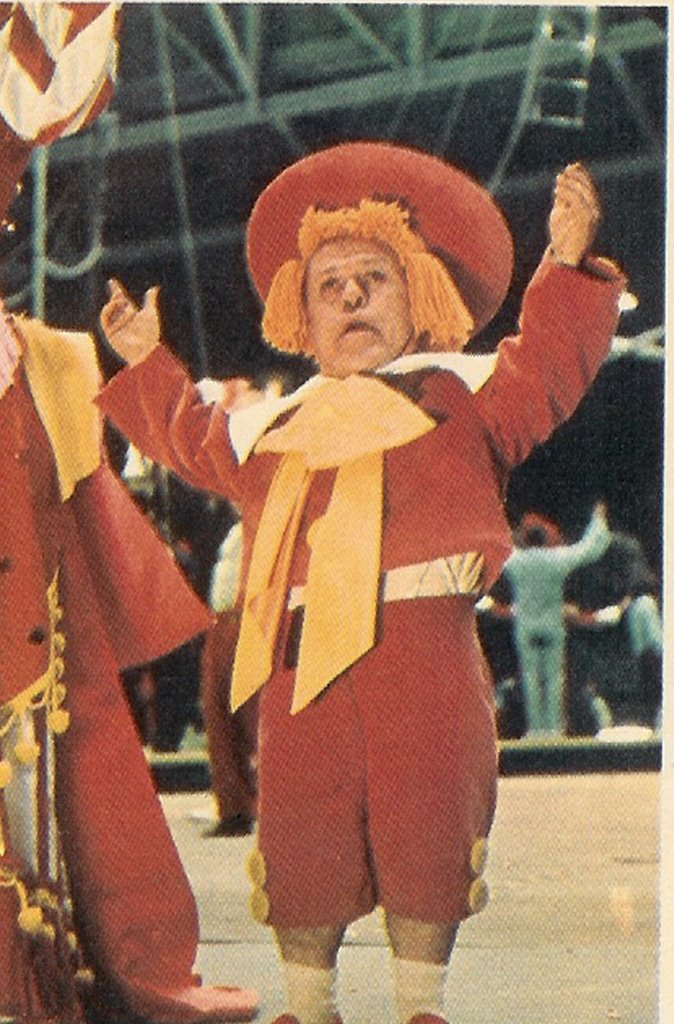
Ernie Burch: Whiteface


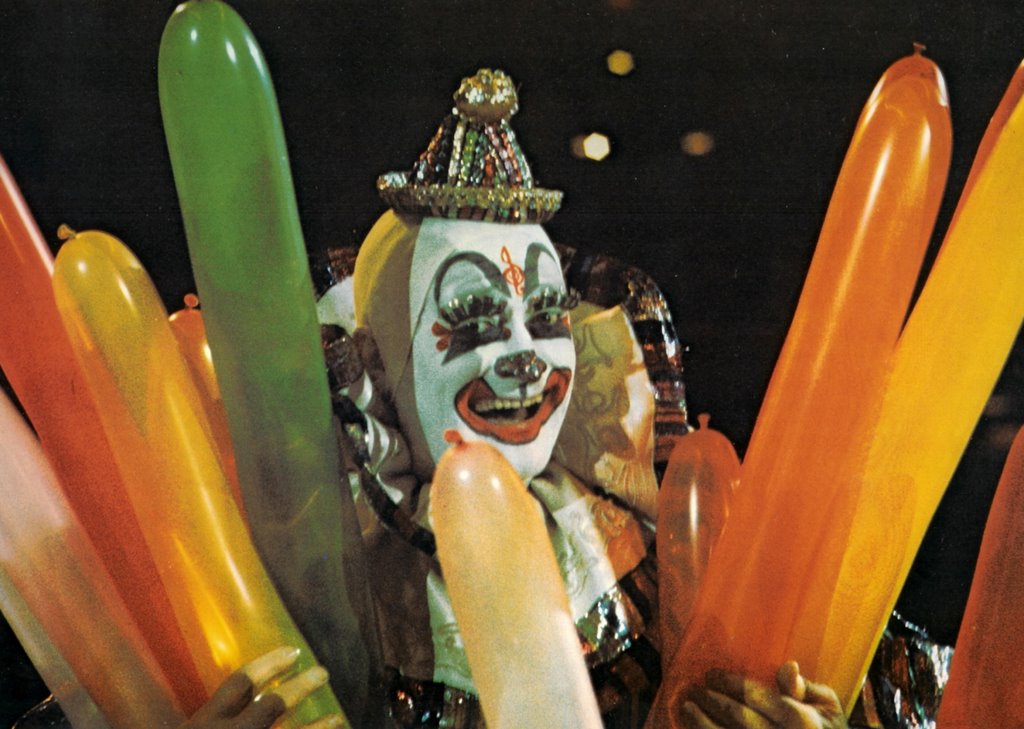
Ernie "Blinko" Burch in his classic whiteface, developed throughout the late 40s and into the 50s on the Ringling show. He's seen here performing his balloon "Come-In" gag (similar to the one performed by Dime and Connie Wilson during the same era) on Paul Kaye's Circus America at the Capital Centre in Washington D.C. in 1974.

A longtime star at Shrine circuses, he and his wife Maran became fixtures at the Circus Circus casino in Las Vegas.

From the program, Circus America looks like the single greatest show in the history of the entire American circus industry and I'm not just saying that because I'd like to get booked for Evansville this year!

But I am open that week... ; )

Ernie Burch: Auguste


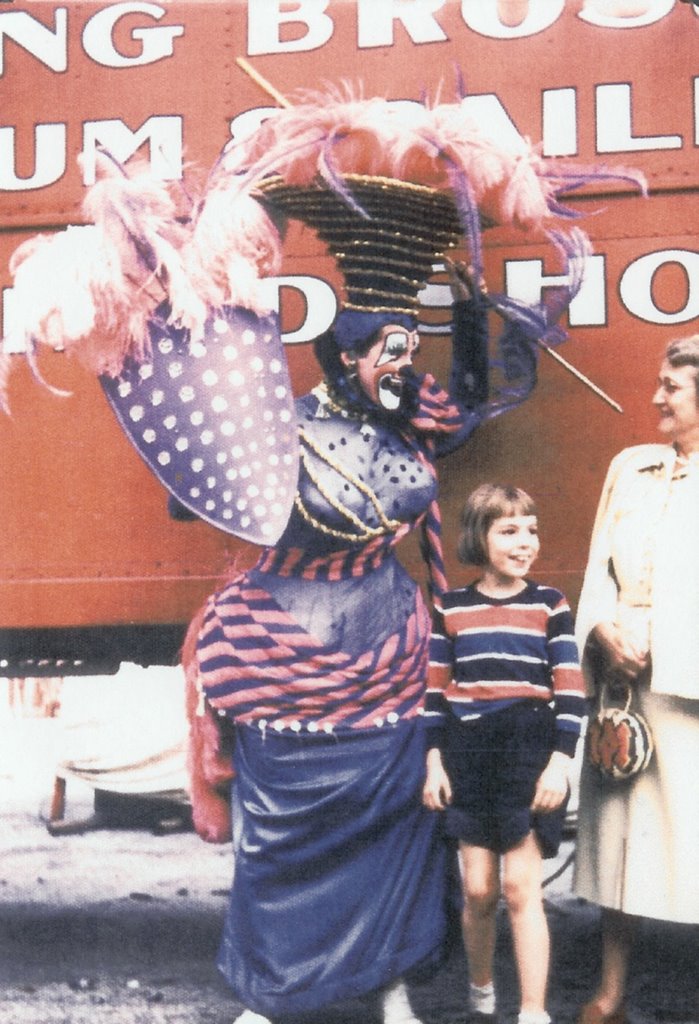
Ernie "Blinko" Burch's auguste makeup on the backyard of the Ringling show in the late 40s. One day I'm going to do a series of entries documenting the evolution of Ernie's makeup. Any other clown would be perfectly satisfied with almost any version of it, but Ernie kept working until he'd developed something really unique and truly original.

Photo courtesy of the Pfening Archive

Friday, August 25, 2006

Johnny Tripp

The first of literally HUNDREDS of circus clown photos recently (and very generously) donated to this blog from Fred Pfening and the Pfening Archive of rare circus photographs...


Johnny Tripp


One of the oldest clowns traveling with Ringling Bros. and Barnum & Bailey in the 1940s, Tripp was a virtuoso on the Carillon (Bell Wagon used in parades and in spec).

Tripp, along with a young Bobby Kellogg, created the "Washer Woman" gag in 1944. Built on a classic "tit-for-tat" rhythm of escalating reciprocal violence (a device also used extensively by Laurel and Hardy as the framework for several of their most successful shorts), "The Washer Woman" has become a standard of the American circus canon as well as an excellent "Teaching Gag" for training new clowns.

I believe it was one of a handful of classic gags that was taught to every single student, for all 30 years of Ringling Clown College.

The Washer Woman Gag


The Original "Washer Woman" Gag
Bobby Kellogg and Johnny Tripp - Ringling/Barnum 1944

Thursday, August 24, 2006

Grock


Grock
Karl (Charles) Adrien Wettach
Born: January 10, 1880, Reconvilier, Switzerland
Died: July 14, 1959, Imperia, Italy


A Swiss auguste whose blunders with the piano and the violin made him the toast of European circus and stage and earned him the title "King of Clowns".


The son of a watchmaker, he became an amateur acrobat and was allowed to spend each summer with a circus, where he performed first as a tumbler and then as a violinist, pianist, and xylophonist. He became the partner of a clown named Brick (who had just split with a partner named Brock) and changed his name to Grock in 1903. Together they appeared in France, North Africa, and South America. When Brick married, Grock joined the celebrated clown Antonet (Umberto Guillaume). In Berlin, appearing on a stage instead of in the ring, they failed at first; but, by mastering stage technique, they obtained a London engagement in 1911.


Two years later Grock had honed and perfected the character of a simpleton among musical instruments that created a sensation with European audiences. The talented musician, who could play 24 instruments and speak many languages, became the "King of Clowns" in the early 1900s and performed for many of Europe's crowned heads. He also started a successful music publishing business for his popular songs. In 1924 he left England and remained on the European continent until his farewell performance at age 74 in Hamburg, Germany, on October 30, 1954.


Grock only appeared for one brief series of shows in the United States. His performances were neither as well received nor as well reviewed as he'd expected and he never returned.


Grock wrote several books, among them his autobiography, Die Memoiren des Königs der Clowns (1956; Grock, King of Clowns), and Life's a Lark. Several of his performances have been preserved on film.


The highest-paid artist at one time in Europe, was broke after buying a circus tent for his variety show after World War II, but recovered financially through successful tours. He retired to the villa he had built in the 1920s on the Riviera.


~ Edited from Grock's Wikipedia entry

Wednesday, August 23, 2006

George L. Fox


George Layfette Fox
America's First Great Whiteface Clown

Known as the "American Grimaldi", Fox introduced Joseph Grimaldi's violent slapstick and topical satire to the American stage. He transformed it into a distinctly American style of humor reflecting the events of his day and, though never a circus performer himself (he did perform at Barnum's American Museum), influenced circus clowns well into the 20th century.

In 1867, he created his masterpiece, Humpty Dumpty, giving over 1,000 performances on Broadway. His character in this production was a distinctive American anti-hero and helped Humpty Dumpty become the most popular pantomime production of the time.

The slapstick form known as pantomime had been a Broadway staple since before the Civil War, but it reached a peak of popularity during the 1860's and 70's. These shows placed figures from Mother Goose stories in wildly varied settings, always finding an excuse to transform them into the clown characters of traditional Commedia Dell Arte. Popular songs were loosely inserted whenever the audience needed a breather. Lavish sets and athletic clowning were expected, along with elaborate ballets. By far the most popular of these pantomimes was Fox's Humpty Dumpty.

The plot had young Humpty and his playmates turn into harlequinade characters and romp through a candy store, an enchanted garden and Manhattan's costly new City Hall. Fox's mute passivity set him apart from the raucous clamor surrounding him, and audiences took the little man to their hearts. Humpty Dumpty was revived several times. Fox eventually gave 1,128 performances in the title role, becoming the most highly paid actor of his time. He initiated the tradition of Wednesday matinee's to take advantage of the show's appeal to children.

Considered by many to be the funniest man of his time, his whiteface character became an important part of popular American imagery, being used in advertisements and children's books long after his death. He is considered a major influence on late 19th/early 20th century circus clowning and his unique style continued to be influential throughout early American cinema.

Sadly, he needed to be removed from the stage during his final performance due to his erratic behavior and was taken to an insane asylum where he died three years later possibly as a result of poisoning from his lead based white make up.

George L. Fox was the subject of Bill Irwin's recent off-Broadway show, Mr. Fox: A Rumination.

Tuesday, August 22, 2006

Paul Jung with Mini Mariachi


Paul Jung, hard at work dreaming up gags for next year's show in his Tampa, FL "Laugh Factory", finding inspiration in the same way that we all do... by have a little person dressed as a Mariachi jump up and down on your desk.

I get some of my best ideas this way ; )

Paul Jung Info


"He was the man behind every great gag. A sweetheart. He could make anybody's problems seem very light. The only thing he took seriously was his work, which got him laughs."

- Prince Paul Albert on Paul Jung

I'm very tempted to start blogging the files that I have on Jung's murder. There isn't much information on it available on the web. The man responsible was paroled a few years back and it would be my very sincere wish that he stumble across it and learn just how much the world lost when he needlessly killed Paul Jung.

The murder must have had a chilling effect on the Alley, which was reported in the press as being comprised of 32 that year (1965) . We all know that the Alley numbered just 14 when Irving, Israel and Judge Roy bought the show in 1968. Albert White, who had been with Ringling for years and was supposed to have dinner with Jung the night of the murder, was with Beatty-Cole the following season. I don't know that Jung's death is the exact reason that "Flo" left but I would imagine that's got to haunt a person.

Senseless.

Sorry if this is a downer for some of you. It's just one of those things that really burns me up.

Monday, August 21, 2006

Bozo, Bud & Lou

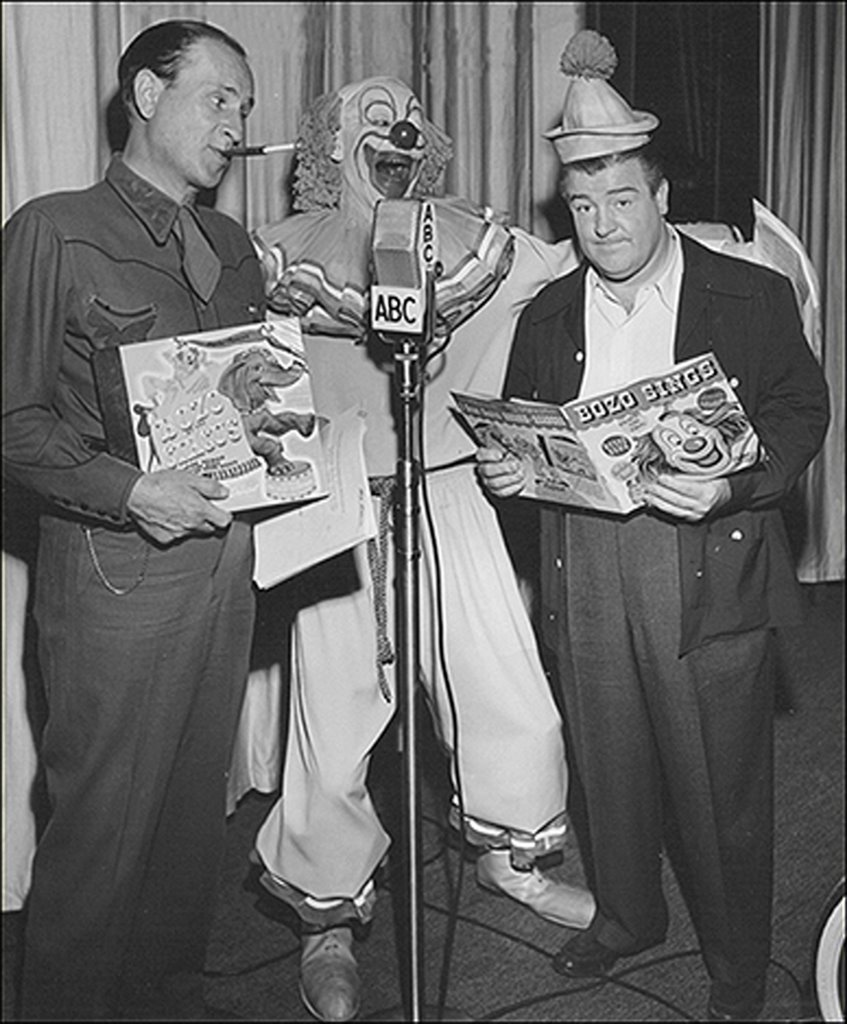
Bud Abbott, Pinto Colvig as Bozo and Lou Costello

Former circus clown, newspaper cartoonist, voice actor (the original voice of Walt Disney's Goofy as well many other cartoon voices), songwriter ("Who's Afraid of the Big Bad Wolf) and the original Bozo the Capitol Clown, Vance DeBar "Pinto" Colvig with two of the stage and screen's greatest clowns, New Jersey's own Bud Abbott and Lou Costello.

I got to spend some time with Dean "Elmo Gibb" Chambers after the Cole Bros. show yesterday and he told me (among a lot of other very interesting things) about being taught the art of being a good verbal Advance Clown from someone who had learned it from Pinto Colvig.

Sunday, August 20, 2006

Paul Wenzel


Paul Wenzel

A very talented clown and a master at making enormous collapsible clown props from silk and wire. The closest contemporary equivelent would be what Fred Garbo does now with his Inflatable Theater Company.

A veteran of many shows, he continued to troupe into his 90s. I wish he'd shared the secret of his prop-making technique with some students from the first few Clown College classes.

Saturday, August 19, 2006

That Was Then, This Is Now: Bill Irwin


Before he was a two-time Tony award winning Broadway star, before he was a highly respected character actor in numerous films, before he was the first performer, let alone clown, to ever win the prestigious MacArthur Fellowship (the "genius grant"), before he and his partners David Shiner and the Red Clay Ramblers created their show Fool Moon and before he won the hearts of every child on earth as Elmo's pal Mr. Noodle on Sesame Street he was just another Ringling Clown College graduate named Bill Irwin.

OK, even then he kind of stood out as being really good.

Bill alledgedly turned down a Ringling contact offer from Irvin Feld, headed west and became an original member of the Pickle Family Circus, where he spent five years in their alley as "Willy the Clown" working alongside Geoff "Mr. Sniff" Hoyle and Larry "Lorenzo Pickle" Pisoni.


Soon he would become one of the most well known figures, and one of the greatest success stories, of the "New Circus" and "New Vaudeville" movements.

And he's a really nice guy!

Thursday, August 17, 2006

That Was Then, This Is Now

Today we know them as the comedy stars of the Ringling Gold Unit but "way back when" they were just two of the more talented guys in Clown Alley, working hard and honing their craft...


Mitch Freddes on the Red Unit in 1977...


and Tom Dougherty on the Blue Unit in 1980.


Thanks!

Thanks to everyone who sent messages inquiring about my 3 1/2 year old son, Shane.

He picked up a bug someplace and has been really sick for the past two days. His fever broke late this afternoon, he's just starting to feel better and is able to keep his food and liquids down.

He's now set up in front of the TV with his Elmo sofa and his Mickey Mouse Club blanket sipping creme soda and giggling his way through his Spongebob and Pee-Wee Herman DVDs... so he's back to his usual routine.

CBCB in the 70s: Red Skelton


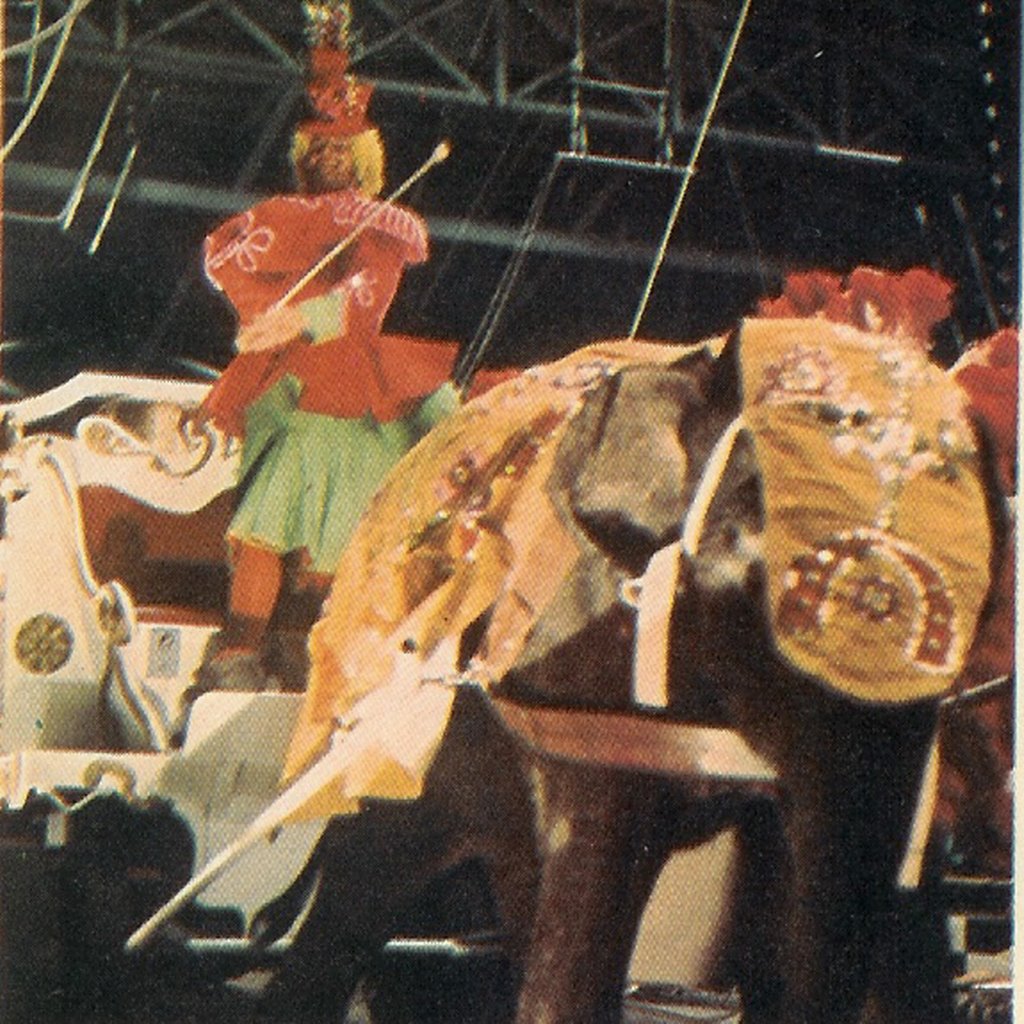
Red Skelton seemed to love reliving his salad days (Red started out as a circus clown on the Hagenbeck-Wallace show) and hanging out with circus clowns. There are numerous stories of him taking the entire Ringling alley out to dinner.

Here he is in a 1973 photo with the Clyde Beatty-Cole Bros. alley taken in New Orleans where he rode an elephant in the show's opening.

From left to right we have Jimmy James Plott, Bernie Kallman, a young Ann Margaret fresh from the set of Kitten With a Whip (just kidding, I'm not sure who the woman is. Mrs. Skelton? A daughter?) Red, what looks like it might be Mike Ferreira, Kenny Dodd, Dennis Stevens and down front we have Bernardo Crespo on the left and Lou Nagy on the right.

Where was Shorty Hinkle? Was he cropped out of this? Did Red have something against short clowns and refuse to be photographed with him ; )

Bernie Kallman, I know you are out there! Please tell us all about your meeting with Red! Give me just a moment first as I cue up the David Rose Orchestra recording of "Holiday for Strings" on my CD player...

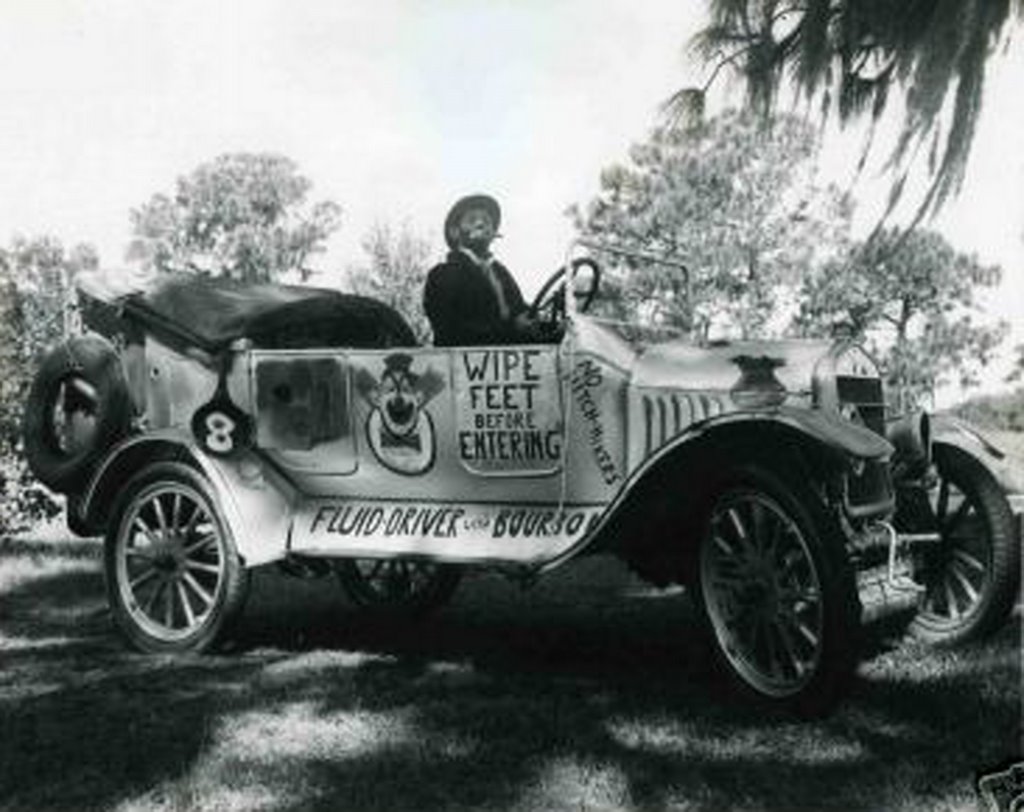
Al Alexander


Al Alexander's Lemonzeen


What I wouldn't give for a car like this!

Wait a minute! I DO have a car like this.

In fact, mine is even better!

Anyone interested in buying a car like this please contact me immediately.

Wednesday, August 16, 2006

CBCB in the 60s: Hinkle, Dullam and Dann

The Clyde Beatty-Cole Bros. Circus in the 1960s, when Frank McClosky, Jerry Collins and Art Concello owned the show, John Pugh was the General Manager, Floyd King was the General Agent, George Plympton was shooting television specials there and Kelloggs used the show and it's cast in commercials under that blue and white tent...


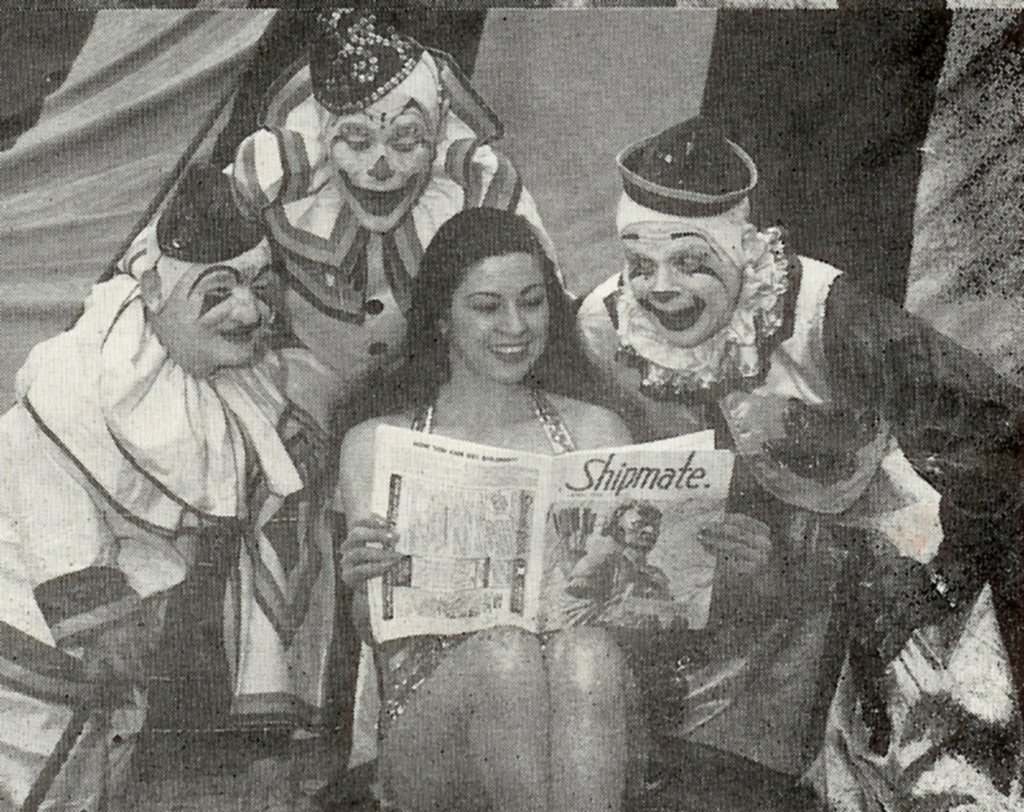
Whitefaces in white wardrobe: from left to right: Shorty Hinkle, Eddie Dullam and Harry Dann with an unidentified young miss.

CBCB in the 60s: McCabe and Dodd

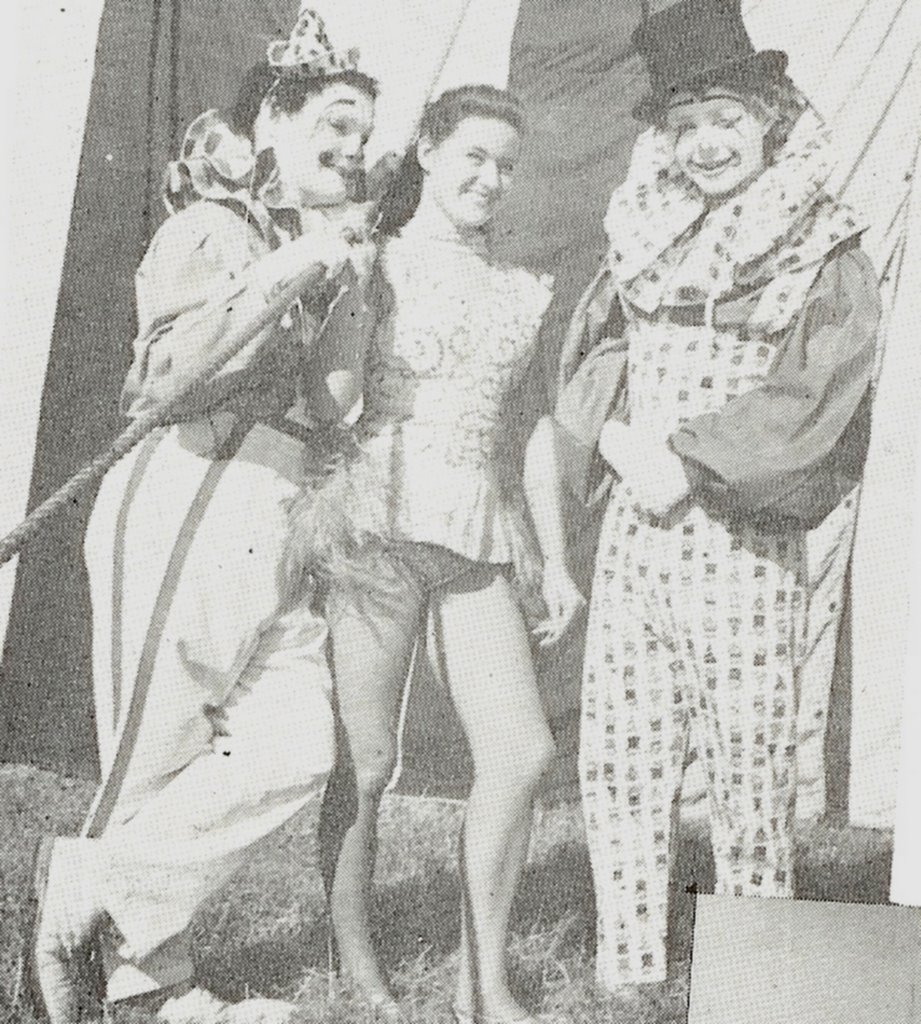
The 60s era Beatty-Cole Alley was teaming with clowns who had extra jobs on the show. Billy McCabe (above, left) ran the cookhouse, Kenny "Tweetybird" Dodd (above, right) was the mailman, Mike Bourbon was in charge of wardrobe and Bernie Kallman picked up some extra scratch as an electrician.

CBCB in the 60s: Ernie Burch


Was Ernie "Blinko" Burch a member of the Clyde Beatty-Cole Bros. Alley between his long stint on Ringling and his equally long run at Circus-Circus in Las Vegas? It's hard for me to say for sure.

Many of the early CBCB programs (and many of their early posters) contain old Ringling photos from the 30s and 40s that have been retouched. Why didn't they use Cole Bros. Circus photos? I don't know. Why didn't they use more recent Clyde Beatty Circus photos? I don't know.

But the 1962 program contains this picture of Ernie, who may have been a member of their Alley in an era when it featured other ex-Ringling clowns such as Emmett Kelly, Harry Dann, Albert White and Jimmy Armstrong and would soon add Lou Nagy and Dennis Stevens.

Tuesday, August 15, 2006

In Rehearsal, Out of Makeup: Soapy

Today's series of photos come from rehearsals for the 100th Anniversary Edition of Ringling Bros. and Barnum & Bailey and were taken in the Winter Quarters arena in Venice, soon to be demolished...

Duane "Uncle Soapy" Thorpe
(Bill Ballantine's portrait of Soapy, from his book CLOWN ALLEY, is of him wearing this spec costume)
___________________________________________________
THIS JUST IN!!!
This may not be a photo of Soapy after all as this message comes to us from ace Gold Unit clown Mitch Freddes...
"I don't think that is Uncle Soapy as he was not on the Blue Show at the time. As far as I know he was never on the Blue Unit. You are correct about the costume in Bill's book . I do remember seeing him in a costume similar to this one."
I've never seen a photo of Soapy out of makeup without his glasses (and the face isn't very clear) so can anyone else here confirm or deny this "Soapy Sighting"?

In Rehearsal, Out of Makeup: Prince Paul

"Prince Paul" Albert